Susa Group (Susa A Family) – Volcanoes National Park Rwanda

Susa Group (Susa A Family) – the gorilla group that was famously studied by Dian Fossey in Volcanoes National Park Rwanda.

It derives its name from the Susa River which flows through their home range. This family is the hardest to trek as it tends to range high into the mountains but RDB’s Tourism & Conservation trackers will know well in advance where the group is located the day before in advance for the next trackers. Sometimes tourists have been barred from tracking the group because of its distant location. This group is very impressive with a family size now of 28 gorilla members

with 3 Silverbacks. It was the largest gorilla group before it split into two. The group had 42 individuals and when one visited it, all you could see where Gorillas all over. The group is well known for the young twins named Byishimo & Impano who are very playful. It also contains one of the oldest known habituated gorillas, Poppy. Born in 1976 Poppy is believed to be from one of Dian Fossey’s original gorilla groups.

Typically, a mother abandons one of the twins, as it is almost impossible for her to care for both. As we watched the mother, Nyabitondore, care for the twins, Impano and Byishimo, at times we thought she would go insane from the task. But today you can enjoy the two bouncing around and playing as if nothing ever happened.

Amahoro Gorilla Group – A mountain gorilla family of Volcanoes National Park, Rwanda

Amahoro Gorilla Group – A mountain gorilla family of Volcanoes National Park, Rwanda

Meaning “peaceful group”, Amahoro, is the most peaceful of all the gorilla groups. The group has 17 individuals: 1 Silverback; 2 Blackbacks; 5 Adult females; 2 Sub adult males; 2 Juveniles and 5 Babies.
However, peace comes at a price. Ubumwe, the group’s silverback is so peaceful, easy going and calm, he has lost group members to Charles in the Umubano group.

To reach Amahoro one must endure a fairly steep climb however the climb is well worth it once in contact with this tranquil group.

Sabyinyo Gorilla Group – A mountain gorilla family from Volcanoes National Park Rwanda

Affordable Uganda gorilla wildlife safari experiences

Sabyinyo gorilla group is an easily accessible group led by the powerful silverback Guhonda. Guhonda, the largest silverback of all the groups, who is well known for his massive physical appearance. Guhonda has kept his main challenger, Ryango, out of his group as a lonely silverback. There are fewer members within this family than in the other groups however they are equally impressive as a family.

Sabinyo gorilla group was named after the Sabyinyo volcano which means “old man’s teeth”. Sabyinyo is one of the groups closest to the park’s edge with 8 individuals: 1 Silverback (the biggest in the park); 3 Adult females; 1 Non adult female; 2 Juveniles and 1 Baby.

The Sabyinyo Gorilla Family of Sabinyo gorilla  Groups is one of the easier Gorilla Group Families to track in Volcanoes National Park.

Karisimbi Gorilla Family (Susa-B gorilla group) of Volcanoes National Park, Rwanda

This is the family that split from the Original Susa (Susa-A) family and now it’s called Susa-B or Karisimbi Group. It contains 15 individuals and it always stays in the slopes of Karisimbi Volcano (4507M). which the highest pick of Rwanda. The Karisimbi Group is better suited to visits for more serious hikers. It appears that they have established their home range high up on the slopes of the Karisimbi caldera. Thus, a visit to this group may well end up as a full-days trek. The group sometimes migrates to higher altitude and hence makes tracking difficult. However, RDB tourism and conservation guides know where to find the group a day before. Tracking this gorilla family may sometimes be prohibited because of its distant location.

13 Group (aka Agasha Group) Gorilla Family in Rwanda’s Volcanoes National Park

When first habituated this Agasha gorilla group had only 13 members hence its name. Now the group has approximately 25 members: 1 Silverback; 12 Adult females; 2 Sub adult female; 3 Juvenile and 7 Babies.

Formerly this gorilla group was commanded by Nyakarima who was challenged by Agashya meaning “the news”. Agashya indeed made news by first watching and estimating Nyakarima’s strengths and eventually challenging him to a fierce fight by taking off with his whole group. This was a shock to Nyakarima and an unprecedented event in observed gorilla history. Agashya then moved up the volcano to secure his group and make sure Nyakarima did not track them. Agashya has since increased his group’s numbers by snatching from other groups and assimilating other lone gorillas, rapidly increasing the group from 12 to 25 individuals.

Agashya gorilla group is known, at the first sign of trouble, to take his whole group up to the top of the volcano. Once, while we were taking a group of tourists to see Group 13 this exact scenario unfolded. Agashya felt that there was another silverback who was about to challenge him. In response, he took the group up the volcano. Every time we thought we were close to see them, Agashya would move the group further uphill. We did not reach them until the very top, where we finally got a chance to see them. By the time we got back to the car we had walked for 12 hours. While it was an exhausting day, it was magical to see gorillas at the top the world.

Volcanoes National Park has 13 habituated gorilla groups for gorilla trekking but all gorilla groups are uniquely different in the way they behave with tourists.

The tracking skill level can be difficult depending on the location of the Agasha Gorilla Family Group on that day.

They are most often found in the gentle foothills slopes of Mount Sabyinyo and Mount Gahinga.

Hirwa Gorilla Group (meaning “lucky one”)

Hirwa group is found in Volcanoes National Park in Rwanda and is led by the silverback gorilla Munyinya.  Hirwa gorilla group came into the limelight on the 17th of June 2006 when trackers witnessed its formation by the merging of some members from two different existing families, namely from Group 13 and Sabyinyo making a very small group then. As luck would have it, other gorillas joined the group and now Hirwa has 9 individuals: 1 Silverback; 3 Adult females; 2 Sub adult females and 3 Babies.

Some members of the Hirwa gorilla group are twins, born in 2011 to Kabatwa. Mountain gorilla twins are very rare and there are only three pairs in Rwanda’s  Volcanoes National Park as of to date.

But now, having met ‘our’ group, I needed to understand gorilla families, where they live, and who they are.

Despite being the newest gorilla group on the block, Hirwa exhibits strength and holds its own amongst all the other established groups.

Vaccinations for Uganda Tour – medication, Healthy risks to consider while visiting Uganda

What vaccinations do I need for safari in Uganda ?

A yellow fever vaccine is essential – bring your certificate with you.

Hepatitis A and B, meningitis, polio, tetanus and typhoid vaccinations are also recommended.

A Rabies vaccination is recommended for anyone who expects to be in close contact with animals or in a remote area.

Be aware that some of these require a course of injections, and others take several days to take effect. So you should visit your doctor or travel clinic as soon as possible before you travel.

Should I bring any other medications for tourists in Ugnda?

Anti-malarial tablets are recommended throughout Uganda – visit your local travel clinic to determine which type is best for you. Note: Chloroquine does not protect against malaria in Uganda.

Bring all prescription medications with you – they may not be readily available in Uganda.

Be sure to purchase travel insurance before you begin your trip, including medical evacuation in case of an emergency.

What Other Healthy Risks Are There?

Even if you are taking anti-malarials, you should still wear an insect repellent, long-sleeved shirts, long trousers and closed shoes. This will also help protect you from other diseases carried by mosquitoes, and other insects such as tsetse flies.

All accommodation in high-risk areas will have mosquito nets  – be sure to use them.
Avoid swimming in Uganda’s lakes – they carry a high risk of bilharzias.

Tap water is not suitable for drinking, though bottled water is readily available throughout the country.

TOURISM TO MUSANZE CAVES TO BE OFFICIALLY LAUNCHED

Musanze caves were formed by geologic activity which was centered in Virunga Volcanoes. The caves are 1.25 miles and are located outside the town of Musanze and are just 90 minutes’ drive from the city of Kigali. The caves harbor lots of bat species and it has got green vegetation which covers its outside part and good for a fantastic photoshoot. These caves were also used as shelter during war time and it’s really important to the local people. The caves are protected and its only expert guides that are allowed to lead every tour and these explain the history of the caves from their early formation to present day.

Inside Musanze Caves

The Musanze caves were cool and natural, the moment beautiful and reflection deserving and cultural folklore at Musanze Caves.  The caves harbor lots of bat species and it has got green vegetation which covers its outside part and good for a fantastic photoshoot.

Now, after great re-invention by the RDB – Rwanda’s Tourism Body, the site is set to be officially launched for tourism activity in a space of a few weeks from now according to information received from the Rwanda Development Board’s Tourism and Conservation Department.

Located north of the country in Musanze District, the site has had a major facelift with establishment of tourist walkways and trails, stairs and other safety measures for tourists.

Apart from tracking the mountain gorillas, visitors to this region have previously been restricted only to fewer options for the extra days they would spend in the area like hiking the Kariosoke, Hiking to the Diana Fossey Grave and mountain gorilla graveyardgolden monkey tracking, a visit to Lake Bulera, Cultural village visits and visits to Gisenyi (Lake Kivu).

In fact scores of tourists have managed to spend only a day in the area and departed immediately after their one-day gorilla tracking activity. In some way this obviously has led to loss of potential revenue as these visitors have the potential to spend more in the local community if they had the choice tourist activities to engage them. Certainly they would even spend at least a night or more in order to engage in these activities.

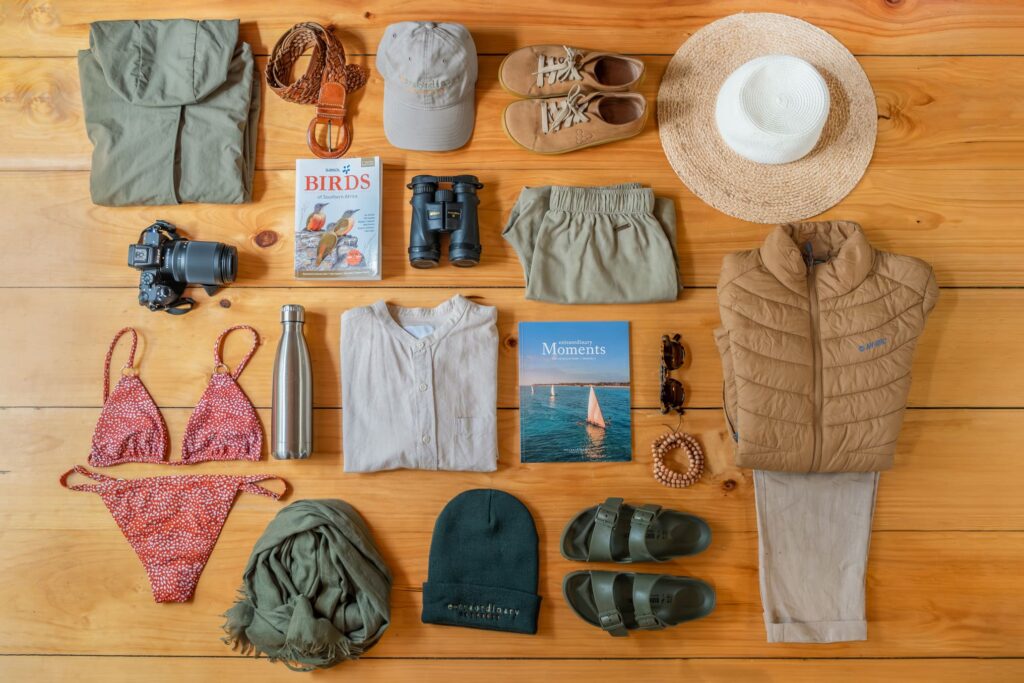
Packing for Uganda Safari- What should I pack on Visit, tour or safari to Uganda?

Packing for Uganda Safari- What should I bring with me on my visit /tour/safari/holiday to Uganda, what essentials should I pack as I plan to visit Uganda?

General

·         Daypack

·         High SPF sunscreen (Uganda is located on the equator!)

·         Flashlight

·         Insect  repellent.

·         Spare or rechargeable batteries (these are difficult to find once you are in the Parks).

·         Waterproof bags to protect equipment

·         Electric plug adaptors for 240 volts AC 50 HZ. UK style square-pin plugs are used.

·         Some people find contact lens uncomfortable in Uganda because of the dust – you may find it more comfortable to were glasses while on the road.

·         Antiseptic handwash.

·         An International Driving License if you are thinking of hiring a vehicle.

Clothing

·         Good walking boots/ shoes

·         Sandals or other light shoes

·         Waterproof jacket or rain poncho

·         Lighter clothing for Kampala and the savannah, with layers for cooler evenings,

·         Warm clothing for mountainous regions, including thermal layers and a fleece.

·         Sun hat/cap

·         Uganda is a conservative country, and visitors should dress respectfully. Avoid the very short skirts and very short shorts.

Should I Bring any Specialist Equipment?

This depends on your interest – for photography, birding and wildlife enthusiasts we recommend the following:

Binoculars: The better ones start at about $250: you get what you pay for! Waterproof binoculars are great in Uganda as they are also dustproof.
For most travelers stick with 8-10 magnification and 32 objectives which are heavy to carry all day.

Cameras: Choose something you know can handle  – a heavy camera with many settings will be off-putting for some people to use. For good wildlife shots, 8et at least 8x optical zoom. Six to eight megapixel is fine unless you want poster-size photos. Bring a lens cloth to remove dust, several changes of batteries (even if you use rechargeable – not all sites have power points) and take several 1GB memory cards instead of one large one to avoid losing all your photos in case something goes wrong.