How tough is the Rwanda gorilla trek? Which is the hardest/ easiest, best gorilla group to track

How tough is the Rwanda gorilla trek- Which is the toughest mountain gorilla group to track in Rwanda, which gorilla group is the most popular to track, easiest gorilla family to track, how many hours does the gorilla tracking take in Rwanda? Susa, Kwitonda, Sabinyo, Umahoro?

How difficult is Gorilla Trekking? How fit must I be to track Mountain Gorillas in Uganda or Rwanda?

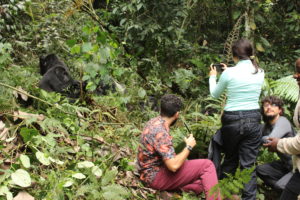
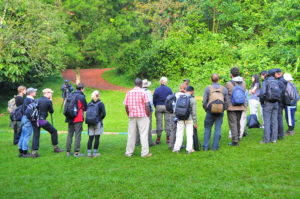
You must be able and willing to hike in rough terrain and in any weather to see Mountain Gorillas in the wild. However, many older people who don’t think of themselves as hikers or adventurers can successfully visit the gorillas. Personal assistants can be hired to carry your daypack and assist you in difficult areas. The local guides will work to make it as easy as possible for you to track and photograph the Mountain Gorillas. We have had numerous clients in their 70’s succeed in reaching their target Mountain Gorilla groups. But many people return very exhausted, muddy and sore if they are not used to vigorous hiking. Altitude sickness is not usually a problem, nor are insects. You will want a pair of gloves and clothing that protects your arms and legs from thorns and nettles. Good balance is helpful in Gorilla trekking as trails may be slippery.
Which is the toughest mountain gorilla group to track in Rwanda, which gorilla group is the most popular to track, easiest gorilla family to track, how many hours does the gorilla tracking take in Rwanda? Susa, Kwitonda, Sabinyo, Umahoro? This is one of the most frequently asked questions about gorilla tracking in Rwanda. And it is also perhaps the most difficult to answer. So many variables are involved, and if they all conspire against you, you could be in for a genuinely exhausting outing (indeed on rare occasions, the guides have had to carry tourists down). On the other hand, if everything falls your favour, the excursion will be little more demanding than the proverbial stroll in the park.
The trek to see the gorillas has two distinct phases. The first is the hike from the closest car park to the forest and national park boundary, which usually takes 30-60 minutes depending on the speed of the party and the group they are visiting. The second is trek into the forest in search of the gorillas, which will usually have been located by the advance trackers by the time reach the forest edge.
The first part of the trek is predictable, and it is usually quite flat and undemanding unless you are going to the Susa (Susa-A), which involves a longer and steeper ascent. The second part is more difficult to predict, as it will depend on the exact location of the gorillas on the day, and on the steepness of the terrain en route. Other factors in determining how tough it will be include the density of the vegetation (bending, crawling through the jungle can be tiring especially if you have to dodge vicious nettles) and whether it has rained recently, in which case everything will be muddier and quite slippery underfoot.

At risk of stating the obvious, age and fitness levels are key factors in how difficult the hike will feel. Susa Group aside, moderately fit people under the age of 40 seldom feel any significant strain, but a high proportion of trackers are in their 50s or 60s, in which case the hike might be something tougher. As one trekker has previously commented in the Bradt Guide (Rwanda): ‘We think you underestimate how strenuous the gorilla trip is. We are both 61 but fit and well, bicycle to work each day , and still we had to take regular breaks due to problems with breathing’. That said, while many older travellers do find the track quite demanding, it is very unusual that they are so daunted as to turn back.
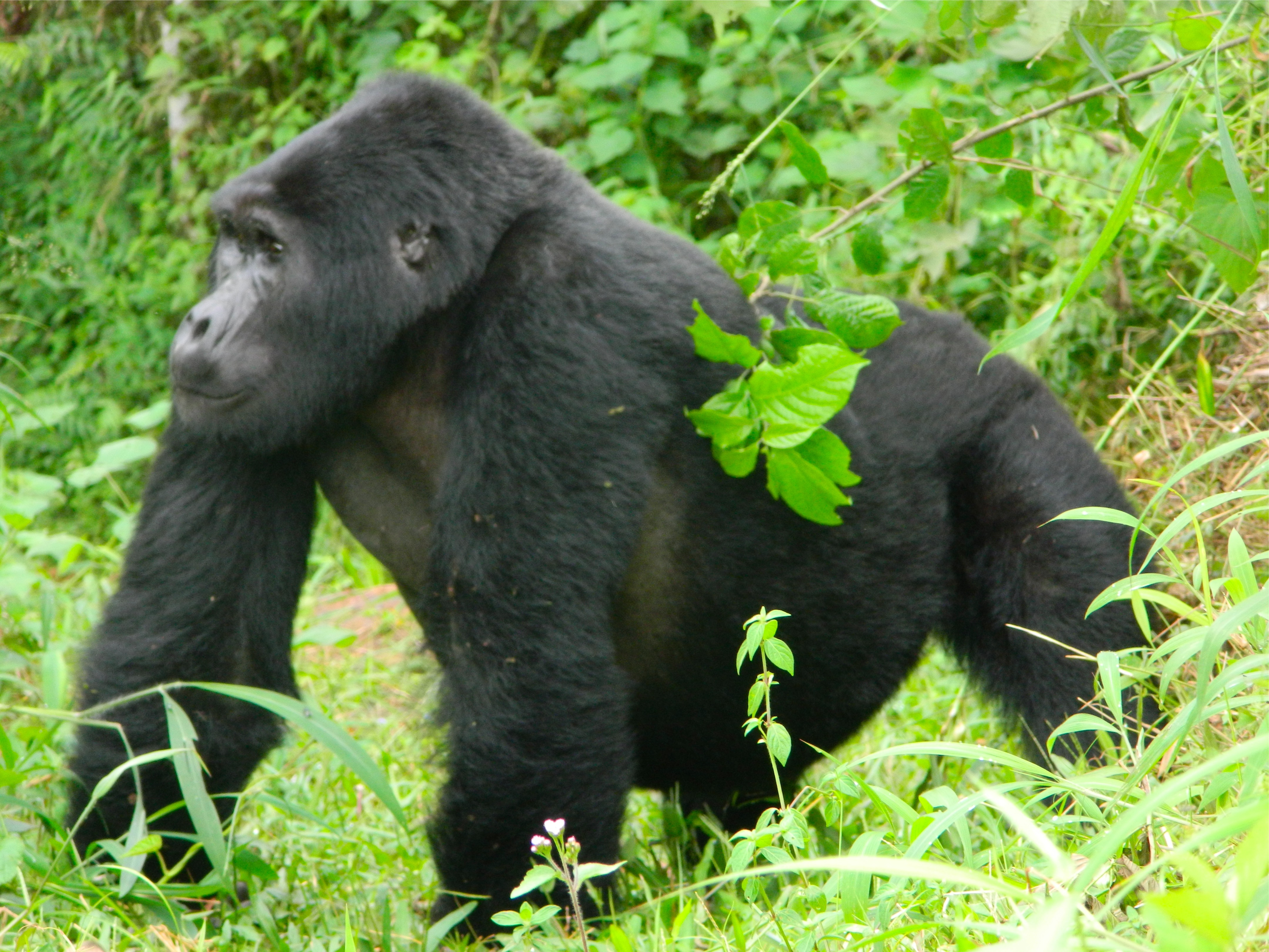
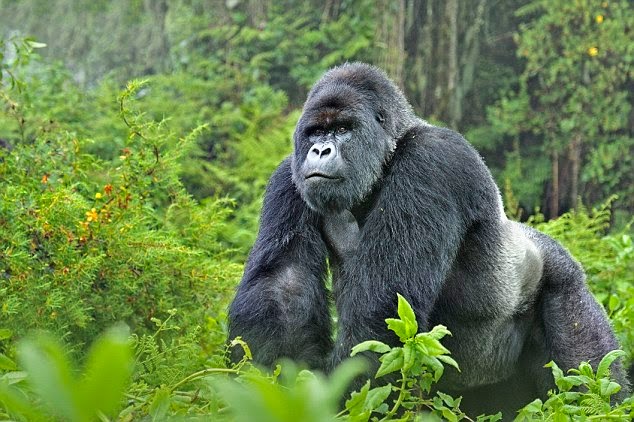
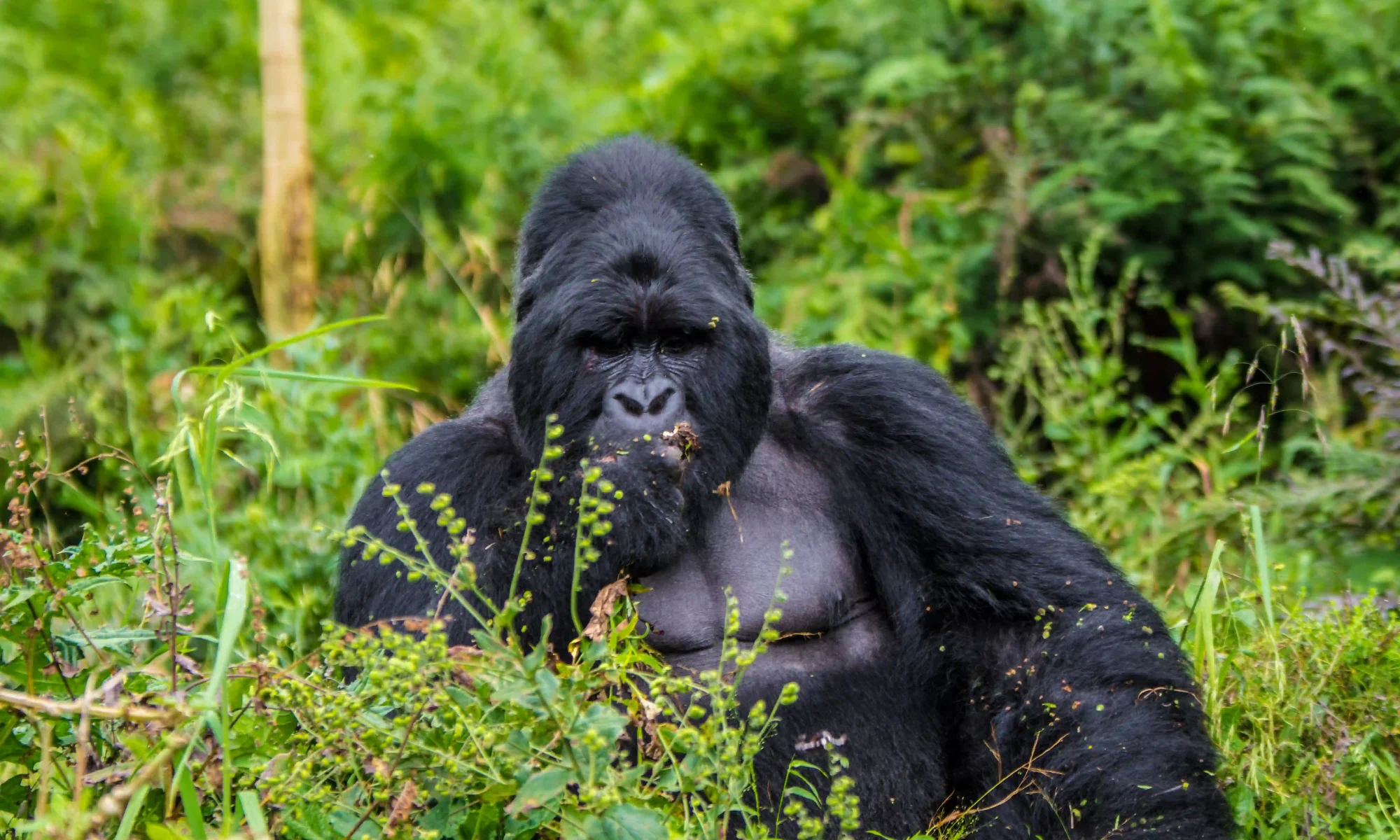
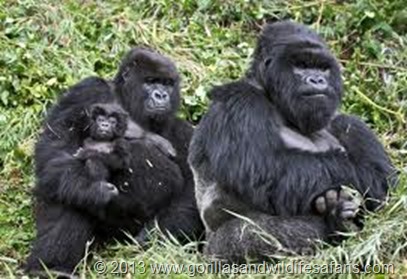
An important factor in how difficult the hike will be is which group you are allocated. As a rule, the hike to the Susa Group is the most demanding (but also most rewarding, with more than 40 gorillas on show), while the Sabinyo Group is the most reliably straightforward to reach. The hikes to Kwitonda, Hirwa and Group Thirteen are also usually quite undemanding, whereas the hikes to Amahoro Umubano Groups tend to be more difficult, but not as tough as the Susa Group.
Unfortunately, these things aren’t set in stone, and any group might be unusually demanding (or easy) to reach on a bad day. Furthermore, nobody can guarantee which group you will be allocated in advance. However the guides at Kinigi do make a conscious attempt to match individuals to the most suitable group, especially if they are asked to. Generally the party for the Susa (Susa-A) consists of the lean-looking under-30s, while the opposite holds true for Sabinyo party.
Two further factors are uneven underfoot conditions and high altitude. Most visitors to Africa live in towns and cities where roads and sidewalks are paved, and parks are serviced by neatly footpaths, so they are unused to walking on the more irregular and seasonally slippery surfaces typical of the ascent paths and forest floor. It will help enormously in this regard to wear strong waterproof shoes or hiking boots with a good tread and solid ankle support. Furthermore, if you think you might struggle in these conditions, there is a lot to be said for avoiding the rainy seasons, in particular March-May, when conditions can be dauntingly muddy.
Don’t underestimate the tiring effect of altitude. The trekking takes place at elevations of 2.500-3,000m above sea level, not high enough for altitude sickness to be a concern but sufficient to knock the breath out of anybody – no matter how fit – who has just flown in from a low altitude. For this reason, visitors who are spending a while in Rwanda might think seriously about leaving their gorilla tracking until they’ve been in the country a week or so, and are better acclimatised. Most of Rwanda lies above 1,500m, and much of the country is higher – a couple of days at Nyungwe, which lies above 2,000m, would be good preparation for the Virungas. Likewise if you are coming from elsewhere in Africa, try to plan your itinerary so that you spend your pre-Rwanda days at medium to high altitude: for example, were you flying in from Kenya, a few days in Nairobi (2,300m) or even the Maasai Mara (1,600m) would be far better preparation than time at the coast.
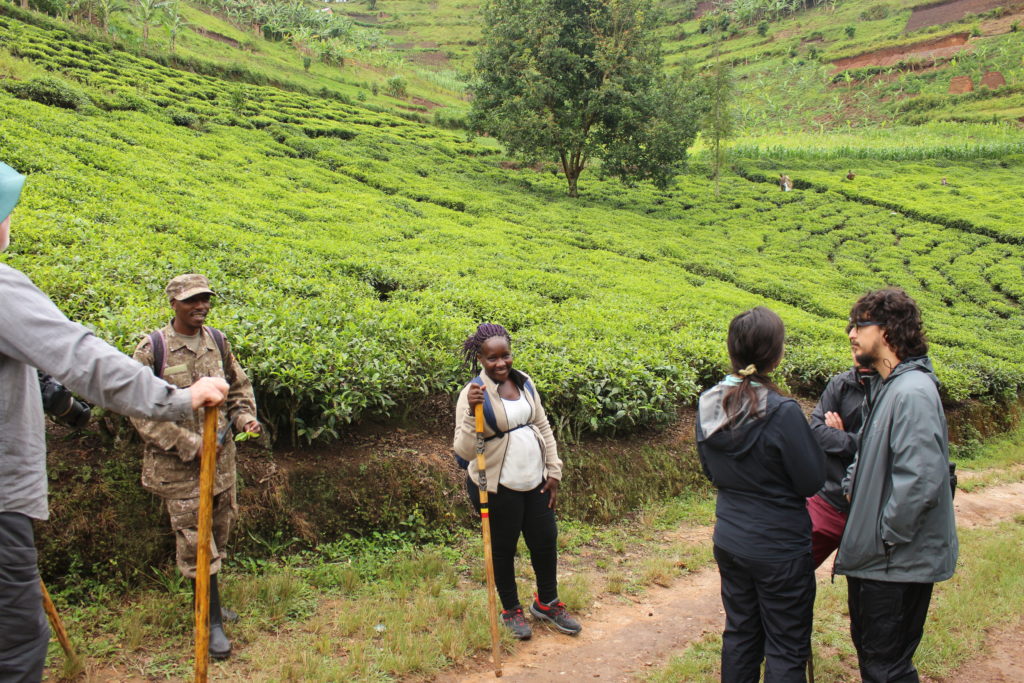
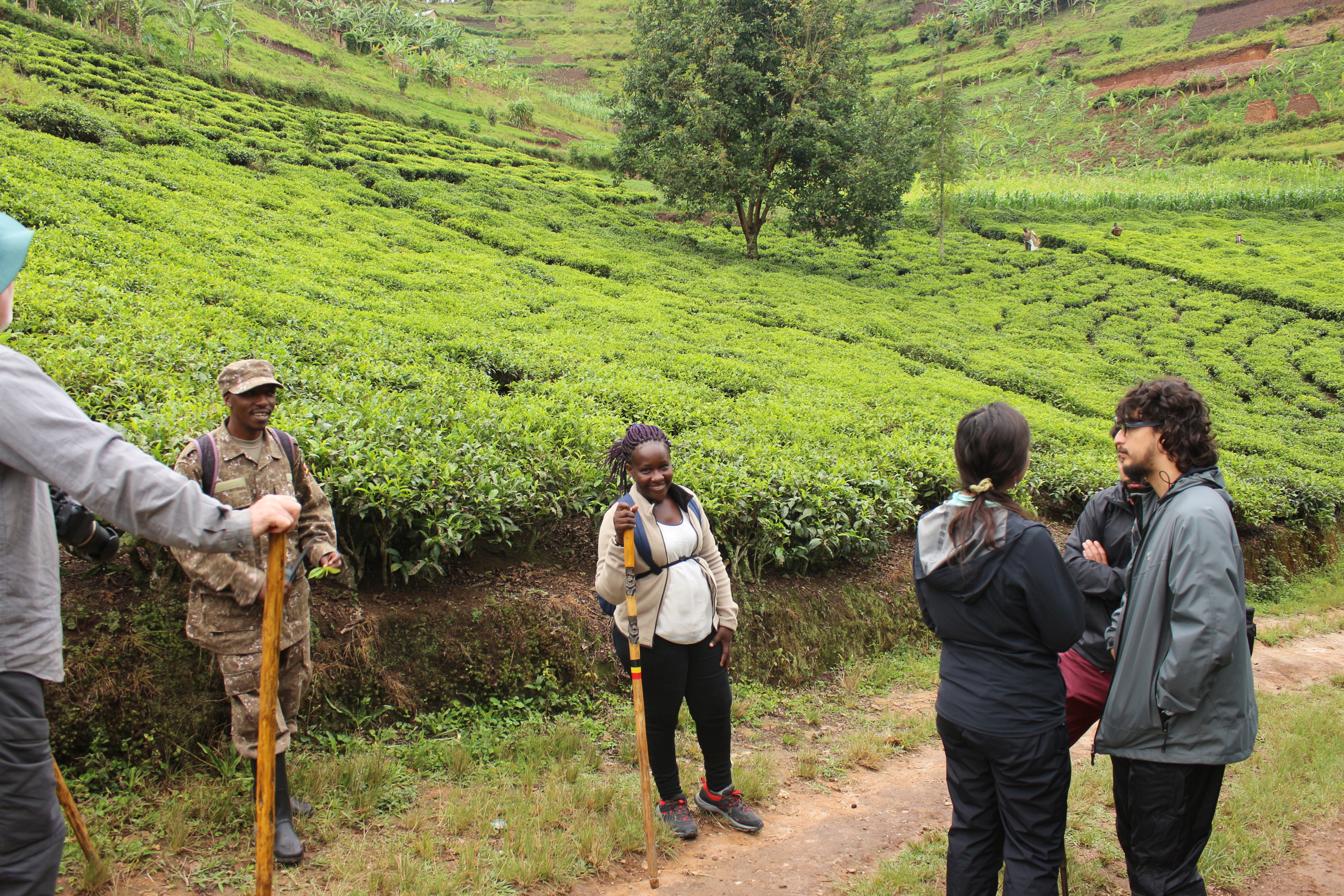
Guides will generally offer you a walking stick at the start of the hike, and, even if you normally shun such props, it is worth taking up the offer to help support you on those slippery mountain paths. If you have luggage, hire a porter too. Once on the trail, take it easy, and don’t be afraid to ask to stop for a few minutes whenever you feel tired. Drink plenty of water and carry some quick calories – biscuits and chocolate can both be bought at supermarkets in Ruhengeri. The good news is that most people who track gorillas find the hike to be far less demanding than they expect, and 99% of cases, whatever exhaustion you might feel on the way up will vanish with the adrenalin charge that follows the first sighting of the silverback gorilla!
How tough is the Rwanda gorilla trek- Which is the toughest mountain gorilla group to track in Rwanda, which gorilla group is the most popular to track, easiest gorilla family to track, how many hours does the gorilla tracking take in Rwanda? Susa, Kwitonda, Sabinyo, Umahoro? How difficult is Gorilla Trekking? How fit must I be to track Mountain Gorillas in Uganda or Rwanda?

Gorilla trek tour prices, cost – Uganda Rwanda Gorilla Tours, Gorilla Safaris

How much does it cost to see  trek the gorillas

A gorilla trekking permit costs USD$1500 in Rwanda and in Uganda, USD$600 for foreigners,  USD500 for Foreign Residents about $70 for East Africans. The gorilla permit only allows you entry to the park but not accommodation and transfers.

What is the cost gorilla tour in Uganda or Rwanda?

If you are a single traveller planning a gorilla trek in Uganda or gorilla tracking in Rwanda, you could get an all-inclusive gorilla tour package for between $2100 to $3500( including a gorilla permit, your accommodation, and then transport)  for 3 days Rwanda gorilla tour or Uganda gorilla trek safari.

In this article get Gorilla trek tour prices and cost comparisons for gorilla safari. When planning to do a gorilla trek/ tracking safari in Uganda or Rwanda, quite a number of factors come into play to determine the final tour cost of the gorilla tracking safari.
That is why it is quite hard for one to have standard gorilla tracking tour prices displayed on a website because every inquiring intending gorilla trek visit will have own unique desires and each of these desires almost dictate that you make new changes in pricing.

You would need to first consider the following items in summary to determine your gorilla tracking tour price:
Your gorilla  safari tracking permit for Bwindi or Volcanoes National Park Rwanda or Congos Virunga NP, book and pay for you accommodation and then pay transport to and from Bwindi Impenetrable National Park, Mgahinga National Park (Uganda) and Volcanoes National Park in Uganda. Depending on where you wish to trek gorillas, the minimum days for a gorilla trekking tour in Uganda is three while for Rwanda, it can be two days for the whole gorilla safari.

Gorilla trek tour prices and costing comparison

Gorilla trek tour prices broken down for Gorilla Safari

In your budget, your number one item should be the gorilla trek permit. It’s a gorilla trek permit that gives you permission to view the endangered mountain gorillas for one hour per person in Uganda or Rwanda. Currently each gorilla trek permit costs USD600. Rwanda gorilla trekking permits cost USD1500.00 per person. Gorilla trek permits for Bwindi Impenetrable National Park and Mgahinga Gorilla National Park are issued by Uganda Wildlife Authority head offices in Kampala on a fast come first serve basis while gorilla trek permits for Rwanda are issues by Rwanda Development Board.
It is advised that you pre-purchase your gorilla permits 3-5 months in advance to avoid shortage most especially during high seasons of June, July, August and September then December, January and February. Uganda Wildlife Authority sometimes offers discounted Gorilla permits in low seasons of November, April and May but these have to be announced at a given date.

Price and Cost of Transport in your gorilla trek tour prices

When planning your gorilla tour/ gorilla safari, you will need to budget and plan transport to and from Bwindi Impenetrable National Park. Bwindi is located 8 hours by road from Entebbe/ Kampala and 4 hours from Kigali. You can also fly to Bwindi from Entebbe for 1 hour (for about $350 per one way). If you are planning to do the Uganda gorilla tour by road therefore from Kampala or Entebbe, you need to budget for three days. The first day is for leaving Entebbe/Kampala to Bwindi and the next day is for gorilla trekking in Bwindi Impenetrable National Park, and on Day 3 after your Bwindi gorilla tracking, drive back to Entebbe or Kampala.

Doing a gorilla tour by bus

From Kampala you could take a bus to a town near Bwindi like Kabale or Kisoro or Butogota which takes almost a full day on road. When you alight the bus, you hire a taxi or boda boda (motorbike taxi) to your accommodation near Bwindi. From your accommodation, you will need transport on the next day to Bwindi park office to start your gorilla trekking and back to your accommodation for the second night. On the third day, you end your self-designed gorilla safari by getting another bus back to Kampala.

Doing a Uganda gorilla tour by self drive or car hire

You can hire a vehicle for your gorilla safari or gorilla trekking tour. The minimum should be 3 days. You drive from Kampala or Entebbe to Bwindi on the first day,  to transfer you to and from the starting point of your gorilla trek and the third day is to drive back to Entebbe/Kampala. Thus you need to budget for a vehicle with guide per day and then fuel to cater for the long distance from Entebbe to and from Bwindi Impenetrable National Park.

Cost and Price of Accommodation in your gorilla trek tour prices

You will have to budget for your accommodation for at least two nights. The first night is when you arrive in Bwindi Impenetrable National Park and the second night is after your gorilla trek. It is possible to trek gorillas and depart Bwindi on the same day but it is advisable that you plan to stay an extra night as you will never tell whether your gorilla trek will take a shorter time or a long one. You, therefore, need a night after your gorilla trekking. Most accommodation properties offer accommodation and meals on full board. Depending on the type of accommodation, both sides of Bwindi Impenetrable National have budget, mid range and up market properties so depending on your taste please do contact us for more information.

Cost of Porters for gorilla tracking/ gorilla trek tour

We encourage all our clients to take porters for their gorilla trek for several reasons. They carry your bags and when you are approaching gorillas, they will remain with your packed lunches and all items that you might not need. They will give you a push or a pull during your trek in the forest. This extra effort is to enable you achieve your dream of viewing these endangered mountain gorillas. The other significance of taking a porter is that by doing so, you are contributing to community development since most of these porter are school going boys and girls and this chance was only given to students to work and get money to for their school fees. By paying for a porter, you are contributing to community development indirectly

Cost of Tips of gorilla trek safari

Tips are an appreciation of good service rendered to you by your safari guide, gorilla trekking guide, waiters and porters. Its not a must that you have to do this. As a responsible Tour Company, we recommend that you put some small funds aside for tipping.

What to wear for gorilla trekking to see the gorillas? Packing for Gorilla Trek

What to wear for gorilla trekking to see the gorillas; what should I wear for gorilla tracking; what is the dress code for gorilla tracking; what should I pack for gorilla tracking; how should I prepare for gorilla tracking/ trekking?

Put on your sturdiest walking shoes, and thick trousers and a long-sleeved top as protection against vicious stinging nettles. It’s often cold when you set out, so start off with a sweatshirt or jersey (which also help protect against nettles). The gorillas are thoroughly used to people, so it makes little difference whether you wear bright or muted colours.

Whatever clothes you wear to go tracking are likely to get very dirty as you slip and slither in the mud, so if you have pre-muddied clothes, you might as well wear them. When you are grabbing handloads of thorny vegetation, a pair of old gardening gloves are helpful. If you feel safer with a walking-stick, you will be offered a wooden one at the start of the ascent.

Carry as little as possible, ideally in a waterproof bag of some sort. During the rainy season,a poncho or raincoat might be a worthy addition to your daypack, while sunglasses and a hat are a good idea at any time of the year. You may well feel like a snack during the long hike, and should certainly carry enough drinking water – at least one litre, more to visit the Susa Group. Bottled water is sold in Ruhengeri town. Especially during the rainy season, make sure your camera gear is well protected – if your bag isn’t waterproof, seal your camera gear in a plastic bag.

Binoculars are not necessary to see the gorillas. In theory, birdwatchers want to carry binoculars, though in practice only the dedicated are likely to make use of them – the trek up to the gorillas is normally very directed, and walking up the steep slopes and through the thick vegetation tends to occupy one’s eyes and mind.

If you are carrying much gear and food/water, it is advisable to hire one of the porters who hang about at the car park in the hope of work. This costs Rfr5,000 per porter. Locals have asked us to emphasize that it is not demeaning or exploitative to hire a porter to carry your daypack; on the contrary, tourists who refuse a porter for ‘ethical reasons’ are simply denying income to poor locals and making it harder for them to gain any benefit from tourism.

You may need to show your passport or some other form of identification when you check-in; find out about this from ORTPN beforehand.

There are several other ideas you could consider on what to wear for gorilla trekking, this is in principle the ideal. But it doesn’t limit on what you can pack for your gorilla trek in Uganda and Rwanda.

Gorilla Safaris

3 Days Gorilla Tour:
For many years, we pride at arranging and organizing the best Gorilla experiences, book with us the most interesting and popular safaris in Africa as we turn your dream holiday to reality.

Continue Reading »

4 Days Kibale And Bwindi Tour:
We are very certain that you will find this experience very unique; it takes you to Kibale, Africa’s greatest tropical rain forests for Chimpanzee trekking.

Continue Reading »

5 Days Gorilla Trekking And Queen Elizabeth:
In just 5 days, we are good enough to combine your interests of visiting the Gorillas in Bwindi with the best of Wildlife in Queen Elizabeth National Park.

Continue Reading »

7 Days Amazing Discoveries:
A great journey across Uganda taking you in the highlights and Uganda’s best Safari parks. This safari has been long time favorite with safari enthusiasts.

Continue Reading »

10 Days Incredible Tour:
Discover Uganda’s most beautiful parks, from the visitors that have booked our 10 days incredible, they testify as the best Uganda tourist circuit enabling them encounter the rarest of the rare in the Africa jungles

Continue Reading »

11 Days Great Adventure:
Carefully planned and sorted with high end Lodge facilities throughout the safari. Have a chance of visiting Uganda’s best national parks while staying at high premium Lodge facilities

Continue Reading »

Related articles about preparing for gorilla trekking and gorilla tracking packing list

Gorilla Trekking Rules and Regulations

Pros & Cons of Uganda Gorilla Trek tours – Gorilla Safaris Uganda Advantages

Tips for Gorilla Trekking – how to have the best gorilla trek in Rwanda

Uganda Gorilla Trekking Cost, How much is Gorilla Trekking

Gorilla trek tour prices, cost – Uganda Rwanda Gorilla Tours, Gorilla Safaris

Is Uganda Safe for Tourists? Is it safe to go to Uganda, How safe is Uganda

Is Uganda Safe for Tourists? Is it safe to go to Uganda?

How safe is Uganda:

Uganda is an largely safe country to visit. Within the cities, there could be some incidences like mugging, snatching but largely, Uganda is safe.

The Uganda people are very friendly and courteous, more so to foreign tourists. At least 1.4 million tourists visit Uganda, with very few safety incidences.

Of course after the April 2019 kidnapping of American tourists in Queen Elizabeth Park (they were both released), there are questions to consider for anyone intending to have safari in Uganda. This kidnap however was an isolated incident and the security reinforcements thereafter made the destination even more safer.

Some Steps For Tourist Safety on Uganda Safari – How to be safer on Uganda Tour – Basic Safety Tips for Travelers to Uganda

These safety tips apply to anywhere you travel, and they’ll come in handy on a trip to Uganda.

  • Before Arrival in Uganda check for Traveler Advisories and Alerts issued by the U.S. State Depart or the British Foreign Office include checking the Website of your Country’s Embassy Website in Uganda.
  • When going out, try to stay in company of locals all the time, a local tour guide, driver, etc.
  • Try to arrive during day and if you are arriving airpot in the night, stay at a hotel near airport. Avoid any night travel outside of Entebbe-Kampala.
  • Use a Mobile Phone with Skype and or WhatsApp on it – most hotels and lodges have WiFi.
  • Try to work with a locally registered tour agent for your safari..
  • Make a copy of your passport and keep it in your luggage
  • Don’t wear flashy jewelry when walking in crowded cities and towns.
  • Don’t carry too much cash with you
  • Wear a money belt that fits under your clothes
  • Don’t carry a lot of camera equipment – especially in major cities

Why Uganda is Safe for Tourists in Uganda

  • A very low gun to population ration. Private gun ownership is highly prohibited. It is rare to even find a home with a gun.
  • Mass shootings like those in the USA are not in Uganda
  • No terrorist incident has been in Uganda since 2010. And from that incident, security across was so tightened everywhere, so it is rather hard to have such terrorist attacks like on malls and shopping centres

More Travel Advice about Uganda

Uganda’s 18 Mountain Gorilla Groups Families in Bwindi Mgahinga for Uganda Gorilla Trek & Gorilla Habituation Experience

As of June 2019, For any one planning a Uganda gorilla trek, you have the opportunity to track any of the following  18 mountain gorilla groups or families habituated for tourism (gorilla trekking/tracking and gorilla habituation experiences) located in Bwindi Impenetrable National Park (17 gorilla groups) and Mgahinga Gorilla NP (1 gorilla group).

The 18 Uganda gorilla trekking groups are in 3 sectors of Bwindi and Mgahinga as below:

If you are considering a gorilla trekking tour in Uganda, you will track gorillas with one of the following families:

Nkuringo Sector: Bikingi, Nkuringo and Bushaho

Buhoma Sector:  Rushegura, Habinyanja and Mubare

Ruhija Sector: Bitukura, Oruzogo, Kyaguriro A and B gorilla groups

Rushaga Sector: Mishaya, Nshongi, Kahungye, Busingye and Bweza.

Mgahinga Gorilla NP: Nyakagezi Gorilla Group

Buhoma Sector Gorilla Groups/ Families

Buhoma Sector is probably the most preferred gorilla trekking area for those preferring a not so tough gorilla trek in Bwindi. Most times the gorillas in this sector are closer to reach. So your gorilla trek might be shorter.

HABINYANJA GORILLA GROUP

17 MEMBERS | UPDATED: 4 JANUARY 2018

Habinyanja Gorilla Family Members Bwindi

Habinyanja Gorilla Family Members Bwindi

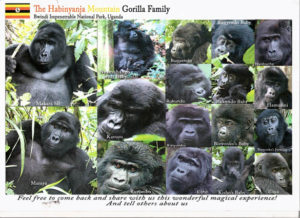
Habituated since 1996, Habinyanja was once a large family with more than 25 members including several strong males. In February 2002 the group split into two families causing the creation of Rushegura family. Habinyanja is currently uniquely known for ranging further and colonizing new areas away from its originally known home range areas. Habinyanja family is composed of 17 individuals including; 1 silverback, 1 blackback, 5 adult females, 1 sub-adult, 3 juveniles and 6 infants. It is found in Buhoma tourism sector of Bwindi Impenetrable national park and is headed by Makara.

MUBARE GORILLA FAMILY

11 MEMBERS

Mubare group headed by Kanyonyi is the oldest habituated gorilla family in Bwindi Impenetrable National Park since 1991. It is uniquely known for Single male leadership and pure intolerance to multi-male leadership by its leader(s). The group’s historical leader (Ruhondeza) was well known for practicing ‘infanticide’ to eliminate younger males and at the time of Ruhondeza’s demise (26th June 2012) only one lucky male (Kanyonyi) had managed to survive his father’s wrath thus taking over leadership immediately.Mubare group is composed of eleven (11) individuals including; 1 silverback, 6 adult females, 3 infants and 1 sub-adult and is found in Buhoma tourism sector of Bwindi Impenetrable national park.

RUSHEGURA

16 MEMBERS

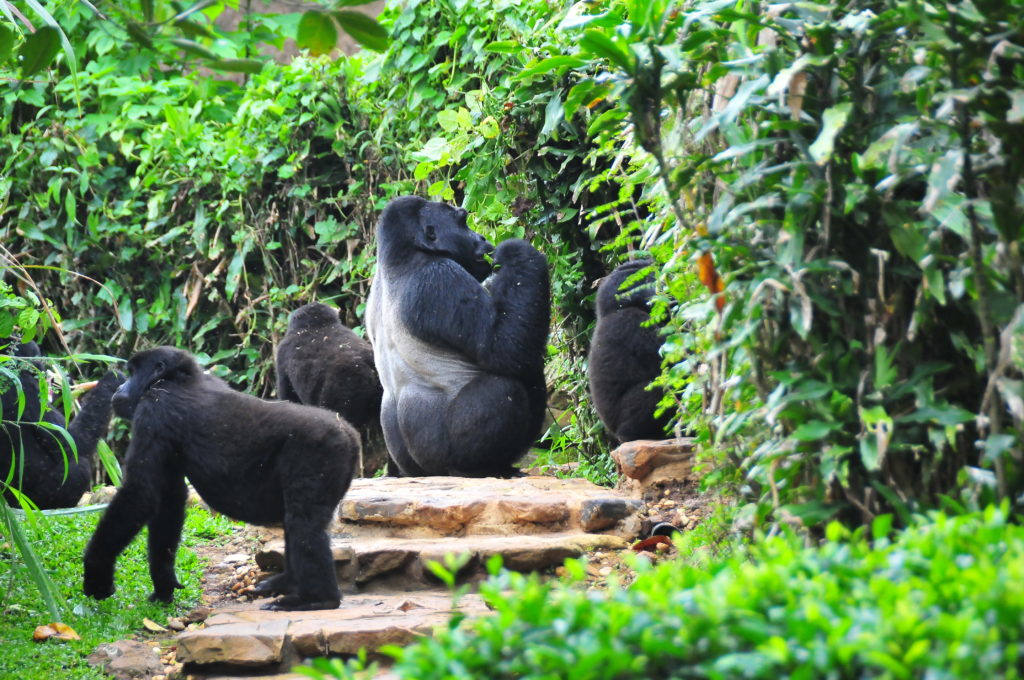
Rushegura group often roams along the park boundary into lodge compounds in Bwindi Buhoma

The family was created in February 2002 following the split of the former larger Habinyanja family. The group was named after a tree species ‘Ebishegura’ found in the area where the split occurred. Rushegura family is fondly known for foraging closer to Bwindi Impenetrable National Park’s headquarters (Buhoma) and for visiting local community gardens around its home range areas. It is composed of 16 individuals who include; 1 silverback, 4 blackbacks, 4 adult females, 3 juveniles, 4 infants and is headed by Kabukojo. Rushegura family is found in Buhoma tourism sector of Bwindi Impenetrable national park.

gorilla tracking Members of Rushegura Gorilla Family, Buhoma gorilla trek gorilla group gorilla uganda

Members of Rushegura Gorilla Family, Buhoma

Gorilla Groups/ Families in Rushaga/ Shongi Sector of Bwindi Impenetrable N. Park

SHONGI GORILLA GROUP

7 MEMBERS

Like Bitukura family, Shongi‘s habituation started in 2006. Initially, this family’s size was as large as 32 members with multi-males but with time intra-male rivalry has caused dispersals of individual members as well as fission. In early 2013, two sections of family members split off the main Shongi group to form the Mishaya family in June 2010 and later again to the current ‘Bweza’ family. Unfortunately, Mishaya Silverback (who had solely led the first splinter section as an adult male died of an obstruction of the intestinal gut on 3rd February, 2014). This resulted into the dispersal of the remnant family members as they had NO other adult male to take lead. Some of the members ended up joining Bweza family while others joined Bikingi family. Today Shongi group is composed of 7 individuals; 1 silverback, 3 adult females, 1 sub-adult, 1 juvenile and 1 infant. Shongi family is headed by Bweza and found in Rushaga tourism sector of Bwindi Impenetrable national park.

BUSINGYE GORILLA FAMILY

9 MEMBERS

Members of Busingye gorilla family were initially habituated as a whole in 2008 with Kahungye family, unfortunately the group broke away in March 2012 creating the Busingye family. This family was named after one of the adult males who led the splinter section to form a new family.  Busingye family is fondly known for foraging within the inner forest and very rarely comes toward the park edge. It is found in Rushaga tourism sector of Bwindi Impenetrable national park and is composed of 9 individuals; 1 silverback, 3 adult females, 1 juvenile and 4 infants. Busingye family is still headed by its founder Silverback Busingye.

BWEZA GORILLA FAMILY

12 MEMBERS

Bweza family members were initially habituated in the larger Shongi family until early 2013 when they detached themselves off the main Shongi family to form their own group under the leadership of Kakono. Found in Rushaga tourism sector of Bwindi Impenetrable national park, Bweza family likes to forage on local community land (where vegetation is more disturbed) than in the intact forest areas. This could be its way of freeing from the initial family. Bweza family is currently composed of 12 individuals including; 2 silverbacks, 4 blackbacks, 3 adult females, 1 sub-adult, and two infants.

KAHUNGYE GORILLA GROUP

17 MEMBERS

Initially, Kahungye family size was as large as 29 members with three adult males but due to intra-male rivalry, fission occurred in March 2012 creating the Busingye family. Today Kahungye family is composed of only 17 individuals that include; 3 silverbacks, 3 blackbacks, 3 adult females, 3 sub-adult, 3 juveniles and two infants. Kahungye family is found in Rushaga tourism area of Bwindi Impenetrable national park and is headed by Rumanzi. The habituation of this group started in 2008.

MISHAYA GORILLA FAMILY

This is the group that was formed after it’s separation from the Nshongi family in 2010.

Mishaya, a fighter he is, tore away from his main family with 10 members and has continued to have several fights with other gorilla families.

Apparently, the Mishaya group is made of 12 family members with 1 dominant silverback.

Gorilla Groups in Ruhija Sector of Bwindi

BITUKURA MOUNTAIN GORILLA FAMILY

13 MEMBERS

Bitukura family is found in Ruhija tourism sector of Bwindi Impenetrable national park. It is headed by Ndahura and is currently composed of 13 individuals; 4 silverbacks, 4 adult females, 2 juveniles and 3 infants. Habituation of Bitukura family started in 2006. The family is well known for multi-male tolerance in the group, sometimes with up to five adult males living in the same family at once.  Bitukura family likes foraging around Ruhija tourism station of BINP and sometimes along the forest edges in the sector.

KYAGULIRO A&B GORILLA GROUPS

20 MEMBERS

Kyaguliro A&B groups are solely dedicated for gorilla research purposes. They are found in Ruhija tourism sector of Bwindi Impenetrable national park. The groups’ habituation began in 1995 following the sudden death of the principal family head Rukina succumbed to an electric shock due to lightning on 7th April 2015. After Rukina’s demise, the family was left under the leadership of an inexperienced young Silverback (Mukiza) who was later ambushed by an immigrating Adult Silverback (Rukara) from the Bitukura family, this fueled a split of  the family into two – (Kyaguliro A -Rukara and Kyaguliro B -Mukiza) in May 2016 . However, this split is not yet assured since the two sub-families continue to forage within close vicinity pausing high potential for re-union or crossing back and forth by some family members. Generally, the entire family is known for spending almost all its time in the inner forest and very rarely gets close to the forest’s peripherals.

Apparently, Rukara is composed of 10 individuals; 1 silverback, 2 blackbacks, 3 adult females, 2 juveniles and 2 infants, while Mukiza is also made up of 10 individuals who include; 1 silverback, 4 adult females, 1 sub-adult and 4 infants.

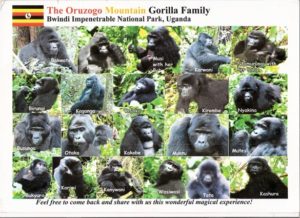
ORUZOGO

17 MEMBERS

Oruzogo Gorilla Group Ruhija Bwindi gorilla trek gorilla tour

Members of Oruzogo Gorilla Group Ruhija Bwindi

Oruzogo family is found in Ruhija tourism sector of Bwindi Impenetrable national park and is headed by Bakwate. Oruzugo family is fondly known for foraging and feeding on vegetation dominated by ‘Alchornea hitela’ plant (locally known as Oruzogo) upon which the group’s family name also originates.  Oruzogo whose habituation started in 2008 is composed of 17 individuals including; 2 silverbacks, 2 black backs, 5 adult females, 2 sub-adults, 1 juvenile and 5 infants.

Gorilla Groups in Nkuringo Sector of Bwindi

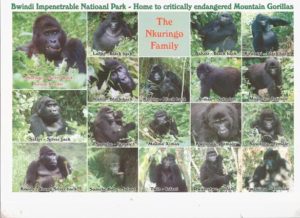
NKURINGO

12 MEMBERS

Members of the Nkuringo Gorilla Family, Bwindi Impenetrable N. Park

Members of the Nkuringo Gorilla Family, Bwindi Impenetrable N. Park

Composed of 12 individuals; 2 silverbacks, 1 blackback, 2 adult females, 2 sub-adults, 3 juveniles and two infants, Nkuringo family is found in Nkuringo tourism sector of Bwindi Impenetrable national park.  Nkuringo family was the first gorilla group to be habituated in the entire southern sector of BINP in 1997. Initially, the group had 17 but with time a number of members kept dispersing up to the current size of 12 members. Nkuringo family is also the first gorilla group to record the birth of gorilla ‘twins’ in BINP in December 2004. The group is famously known for foraging outside the park for up to 98% of their time. This practice led to the displacement of the former local human settlers in the frontline villages in Nkuringo sector to create a buffer zone to minimize human-wildlife interface. This displacement followed an outbreak of Scabies in the Nkuringo family in December 2000. Nkuringo family is headed by Rafiki.

BIKINGI GORILLA FAMILY (EXCLUSIVE FOR GORILLA HABITUATION EXPERIENCE)

15 MEMBERS

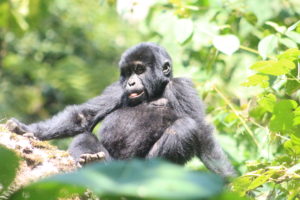
Uganda gorilla tracking tour juvenile bwindi safari

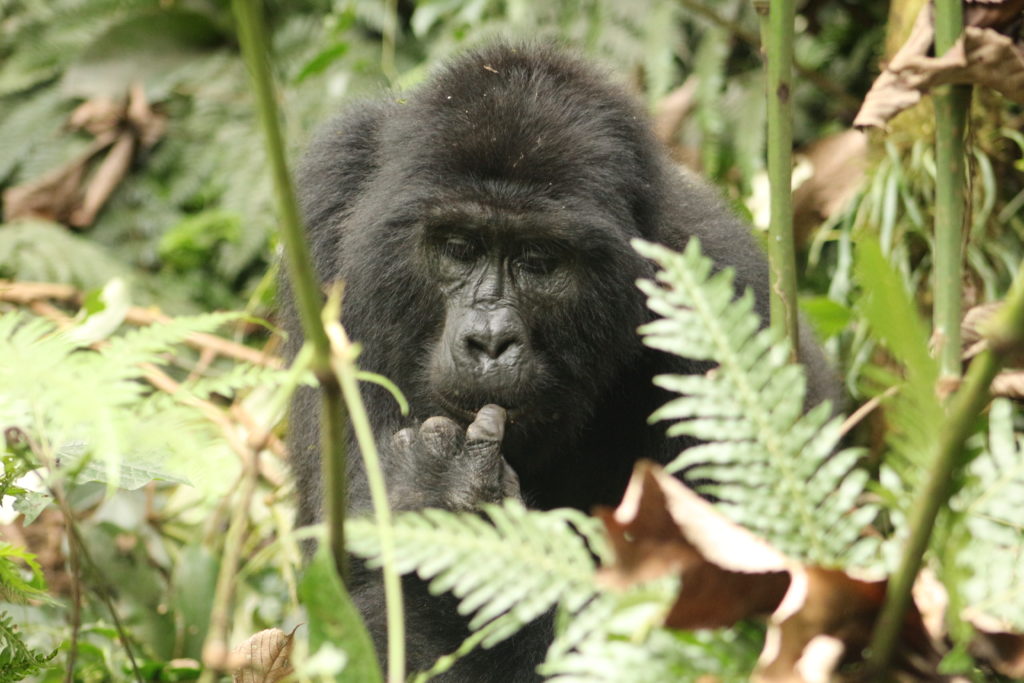
A juvenile mountain gorilla in Bikingi gorilla family Bwindi, Uganda

The habituation of Bikingi gorilla group commenced in early 2012 as a follow-up exercise of the dispersing members of the disintegrated Mishaya family. Indeed, several members of the former Mishaya family were located in the group alongside other non-habituated members and later-on declared for habituation to keep close monitoring of the formerly habituated members. Bikingi family is found in Rushaga tourism sector of Bwindi Impenetrable national park. Unfortunately, this family’s leadership is not yet confirmed because it’s still undergoing habituation. Bikingi family is composed of 15 individuals including; 1 silverback, 5 adult females, 2 sub-adults, 2 juveniles and 5 infants.

BUSHAHO GORILLA FAMILY

8 MEMBERS

Following a number of individual gorilla dispersals from Nkuringo family, a search for their whereabouts was launched in early 2012. It was discovered that one of the former Silverbacks of Nkuringo family, SB ‘Bahati’ who had dispersed earlier was leading a parallel family. Some of the members in this family were former members of the Nkuringo family among other non-habituated members.  What started as a follow-up exercise later led to close monitoring of the behavior of the parallel family. The group was later habituated and named ‘Bushaho’ after the topo-name of the locality where the group forages most. Bushaho family is still headed by Bahati and is found in Nkuringo tourism sector of Bwindi Impenetrable national park. Bushaho family is composed of 8 individuals; 1 silverback, 1 blackback, 3 adult females, 1 sub-adult, 1 juvenile, and 1 infant.

Mgahinga Gorilla National Park – Gorilla Families/ Groups

NYAKAGEZI GORILLA FAMILY

10 MEMBERS

Nyakagezi family is found in Mgahinga gorilla national park. Apparently Nyakagezi family is the only habituated gorilla in Mgahinga gorilla national park.  It is headed by Mark and composed of 10 individuals; 5 silverbacks, 2 adult females, 2 juveniles, and 1 infant. The habituation of Nyakagezi family started in 1991 and the group was later opened for tourism in 1994. The gorilla family is fondly known for its trans-boundary nature which makes it freely roam across the three countries (Uganda, Rwanda & DRC) of the Virunga massif at will. Like Bitukura gorilla family in BINP, Nyakagezi is fondly known for multi-male tolerance.

Bwindi mountain gorillas trekking gorilla group gorilla tracking uganda gorilla tour

Bwindi mountain gorilla group

Birding in Murchison Falls National Park

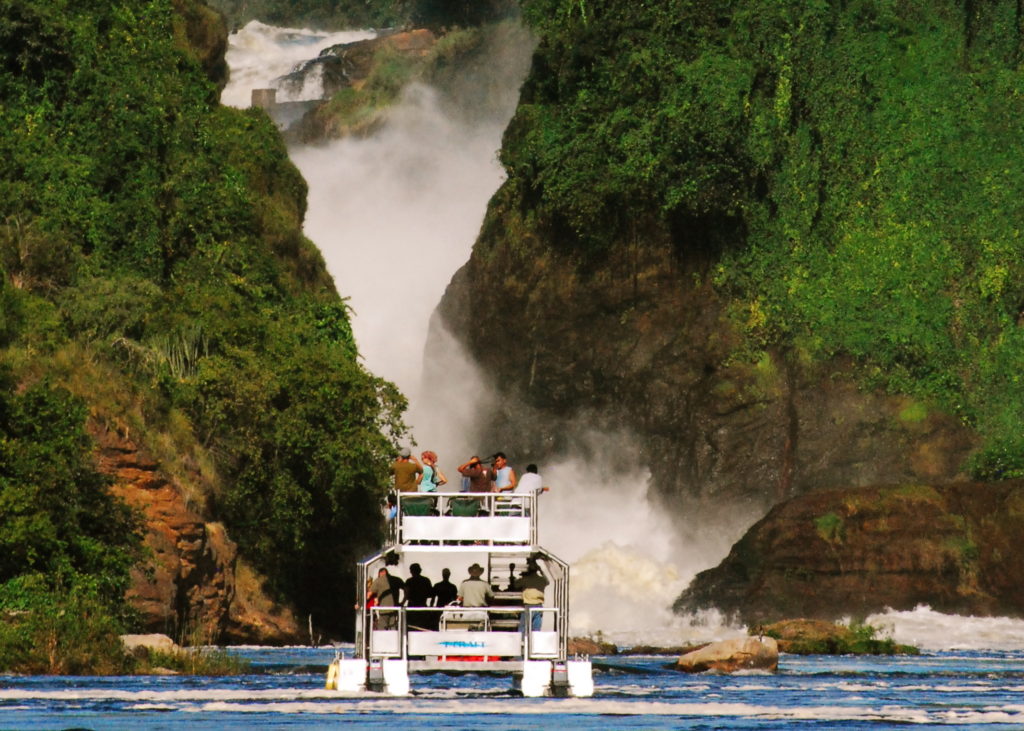
Murchison Falls National Park is Uganda’s largest national park, covering approximately 4,000 km2. The Park supports a remarkable 451 species of birds.

Birding in Murchison Falls National Park has the main birding attraction being the Shoebill, best sighted in the dry season from January-March.

The commonest species found in the plains include the Marabou Stork, Abyssinian Ground Hornbill, Secretary Birds, Black-bellied Bustards, Open-billed Storks and Widow Bird.

Closer to the river where there are more thickets and woodlands, the commonest bird varieties include the Swallow-tailed and Red-throated Bee-eaters – particularly in the Nyamusika Cliffs; Woodland, Pied, Giant and Malachite Kingfishers; Francolin; Hornbills, Grey heron; Hamerkop; Shrikes; Flycatchers; Cuckoos; Woodpeckers; Crombecs and Warblers. The riverbanks are also home to ducks, geese, stilts and plovers.

The park’s main birding attraction is the Shoebill, best sighted in the dry season from January-March.

The list of bird species sighted when birding in Murchison

The Park boasts of a rich avifauna, with a Checklist of up to 460 bird species and 76 mammal species due to its large size and the full range of habitats. Murchison supports 20 species from three non-qualifying biomes: 11 species of Guinea-Congo Forests, six species of the Afro-tropical Highlands and 3 of the Somali–Masai biome. River Nile

The most sighted bird species of Murchison Falls National Park include:

  • African Darter
  • Goliath Heron
  • Yellow-billed Stork
  • Abdim’s Stork
  • Shoebill
  • White-faced Whistling Duck
  • Secretary Bird
  • Osprey
  • Dark Chanting-Goshawk
  • Martial Eagle
  • Hugli’s Francolin
  • Denham’s Bustard
  • Spotted Thick-knee
  • Senegal Thick-knee
  • Rock Pratincole
  • Black-headed Plover
  • Long-toed Plover
  • Black-billed Wood-Dove
  • Veracious Dove
  • Long Tailed Nightjar
  • Standard-winged Nightjar
  • Pennant-winged Nightjar
  • Blue-naped Moosebird
  • Giant Kingfisher
  • Pied Kingfisher
  • Malachite Kingfisher
  • Swallow-tailed Bee-eater
  • Red-throated Bee-eater
  • Northern Carmine Bee-eater
  • Black Scimitarbill
  • Abyssinian Ground Hornbill
  • Yellow-fronted Tinkerbird
  • Black-billed Barbet
  • White-fronted Black Chat
  • Silverbird
  • Beautiful Sunbird
  • Piapiac
  • Speckle-fronted Weaver
  • White-browed Sparrow Weaver
  • Chestnut-crowned Sparrow Weaver
  • Vaseline Masked Weaver
  • Bar-breasted Firefinch
  • White-rumped Seedeater
  • Saddle-billed Stork
  • Sacred Ibis
  • Spur-winger Geese
  • Black Crake
  • Grey-crowned Crane
  • Blue-naped Moosebird
  • Spotted Morning Thrush
  • Nothern Crombec
  • Red-winged Grey Warbler
  • Black-headed Batis
  • Black-headed Gondola
  • Grey-headed Bush Shrike
  • Double-toothed Barbet
  • Yellow-throated Greenbul
  • Whistling Cisticola
  • Black-lored Babbler
  • Sulphur-breasted Bush Shrike
  • Fawn-breasted Waxbill
  • Black-faced Waxbill

Uganda Gorilla Trekking Best Time To Go Gorilla Tracking Tour

The best time of the year to visit Uganda  and go for gorilla trekking / gorillas tracking is June, July, August, September, October, January, February and March. And this is probably the best time to do safari in Uganda. These months will have less rain than the other moths hence allowing you the best gorilla trekking experience in Uganda.

However gorilla trekking in the months of April, May and November can be a bit challenging because there is a bit more rain in those months and the roads to Bwindi might be hard to drive through. If you want to experience the best prices for gorilla trekking, and lower price for Uganda Gorila Tours, you should go during these months.

Best Time To Visit Uganda, When To Go For Gorilla Trekking Safari

The best time of the year to visit Uganda  and go for gorilla trekking / gorillas tracking is June, July, August, September, October, January, February and March. And this is probably the best time to do safari in Uganda.

When is the best time to trek mountain gorillas Uganda?

Most gorilla tracking in Uganda happens during the months of January February, Mach, June, July, August, September and  October. The gorilla trekking these months is quite easier because there is almost no rain in Bwindi. But also it is easy for photographing the gorillas in Bwindi. The months of June, July and August are popular for gorilla trekking because they are also the summer holiday months in Europe, which is the main source market for Uganda gorilla trekking.

But also, it is a bit more expensive to visit the gorillas these months because flights are more costly and accommodation as well.

Which is the Cheapest Time for Gorila Trekking, Most Cheap gorilla Trekking Time?

You can get the cheapest gorilla trek tour in April, May, November. At this time, Uganda gorilla tour operators will offer very cheap gorilla trek tours. Also, accommodation for gorilla treks is cheaper, and flights to Uganda are cheap.

In some years, there are promotional gorilla permits for these months as well.

Normally, the gorilla permit is USD600 in Uganda but if you are lucky, Uganda wildlife Authority can discount this for you.

Cheapest Gorilla Trek Tour Package

The cheapest gorilla trekking tour package for Uganda is USD1020 per person if you are two persons and USD1650 if you are one person. If you are 3 or more, the gorilla trek cost is much lower than that. These are all inclusive gorilla tour prices with gorilla permits, accommodation and meals, transport to Bwindi and back from the gorillas.  Please contact us for the updated lower/ promotional lower season cheap gorilla trek costs.

No matter what your explanation is, experience reveals that gorilla trekking can be enjoyed all year round and you will surely enjoy a great experience.

Tips for Gorilla Trekking – how to have the best gorilla trek in Rwanda

Tips for Gorilla Trekking – how to have the best gorilla trek

  • Purchase your gorilla trekking permits as far in advance as possible for priority assignment to a choice group and to be sure you obtain a permit at all.
  • You will be with a group and guide. Also, consider hiring a local person as a porter assistant, even if you are very fit. This adds a great cultural dimension to the experience and is not really expensive.
  • If you have the choice, visit the largest group available to you to maximize the photo opportunities and the different behaviors you will see.
  • Prepare for the possibility of rain at any time of year.
  • Wear long sleeves and slacks and bring gloves to protect against thistles, nettles and thorns.
  • Wear durable hiking shoes, you will be off-trail in rough terrain.
  • Expect you might have a long hike. Be in the best physical shape you can be.
  • Understand your camera well, Cameras with built-in video are very good. The telephoto ability helps.
  • Consider traveling with a companion or friend with whom you will share the lifelong memory of the encounter.
  • Listen to the advice of your guide. Trust that he or she really wants you to get great photos and have the best possible experience.

It’s important to know what you’re getting into before setting out on a gorilla trek. The hike through the forest is challenging and tough-going (your guides will often have to machete a path through the ferns that clog the undergrowth), but it’s within reach for anyone with a reasonable level of fitness. You will get muddy, though. And sweaty. Beneath the forest canopy, the humidity is very high, and it’s a good idea to bring a canteen of freshwater to hydrate as you go.

If you are particularly concerned about the terrain, consider hiring a local porter. The porters will carry your bag, and help to you navigate some of the steeper or trickier sections of the trek. In fact, hiring a porter on a gorilla trek is a common practice by travelers of all ages and abilities. Not only does it make the trek easier for you, but you’re also providing a valuable source of employment for locals. The minimum cost of hiring a porter on a gorilla trek is $20USD,

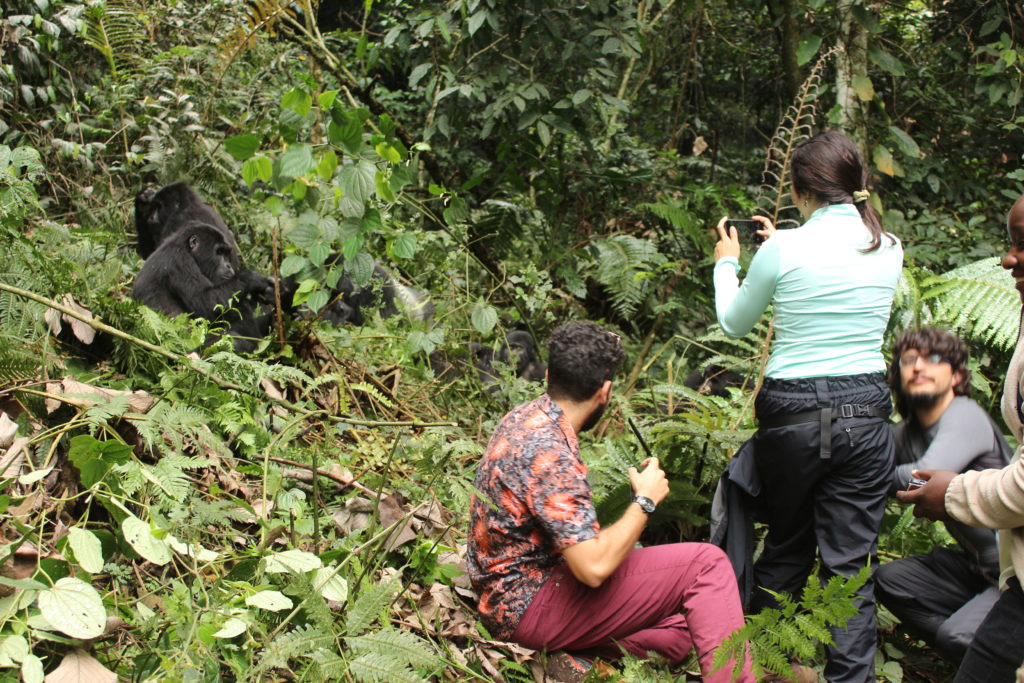
Eventually, after bush-bashing your way through the scrub, you’ll come across a gorilla family, peacefully playing in a forest clearing. Your trekking guides and rangers will have prepared you for what to expect. There’s no direct interaction with the gorillas (unless one moves past you), but you should get pretty close. You’ll have a good 45 minutes to an hour to just sit and observe these animals in their natural habitat. We promise it’s something you’ll never ever forget.

What to pack for your gorilla trek

Pack Enough Food. Pack enough food before going for Gorilla Tracking. Gorilla Tracking is a very tiring activity that may last up to 8 hours, implying you will need refreshments and food (probably snacks) during the activity. The sad thing is you won’t find any spots to buy food or drinks in the forests. It is highly recommended that you have a good breakfast on the gorilla trekking morning.

Water – As you hike through the mountain forest, you kind of get dehydrated and you need lots of drinking water.

Boots – Essential. The terrain is rough and in the forest, it is easy to slide over. Shoes with good grip are highly recommended. Avoid the cheap sneakers as they can’t match this do.

Gloves – During the trek you might be grabbing trees, branches and vines, and your hands can get a bit scratched and generally beaten up if you’re not careful. Pack a tough old pair of gardening gloves. They might look a bit lame, but you’ll be glad you brought them.

A light rain jacket – Bwindi and Virunga are both tropical rainforests, and there’s a good chance of rain almost year-round. Pack a lightweight poncho or rain jacket that you can roll up in your bag and bring out if necessary.

Long pants and shirts – It’s best not to expose too much skin during the jungle trek, and remember to tuck your trousers into your socks – you really don’t want safari ants crawling up there.

What Else To Do After Gorilla Trekking

Apart from the mountain gorilla trek, there are several other activities to do in Rwanda. You could do a hike to one of the volcanoes in the park or visit Lake Kivu, which is two hours away by road, enjoy a cultural village visit in Musanze, or continue to Nyungwe National Park for chimpanzee tracking and other primates.

Tips for Gorilla Trekking - how to have the best gorilla trek in Rwanda

Africa Ebola Outbreak– Is Uganda safe for tourists? Is there Ebola in Uganda

In this article, we try to answer the following Questions: Africa Ebola Outbreak– Is Uganda safe for tourists? Are you safe from Ebola when you travel to Uganda? Will I catch Ebola while in Uganda? How to avoid Ebola in Uganda.

You are definitely safe from Ebola when you tour Uganda. The current Ebola outbreak in DRC doesn’t in anyway affect tourist activity in Uganda. There is a lot of restrictions for those traveling from DRC to Uganda at all entry points. There is a lot of healthy scrutiny at all Uganda border points for Ebola that it is very very hard to have Ebola in Uganda. So it is absolutely safe to travel to Uganda, you won’t catch Ebola.

We understand that there is concern over the Ebola outbreak in DRC Congo and we would like to reassure everyone  that to date there have been no reported cases of Ebola in Uganda, Rwanda.

In this article, we tray to answer the following Questions: Africa Ebola Outbreak– Is Uganda safe for tourists? Are you safe from Ebola when you travel to Uganda? Will I catch Ebola in Uganda? How to avoid Ebola in Uganda.

The World Health Organization (WHO) states: ‘The risk of a tourist or businessman/woman becoming infected with Ebola virus during a visit to the affected areas and developing disease after returning is extremely low, even if the visit included travel to the local areas from which primary cases have been reported. Transmission requires direct contact with blood, secretions, organs or other body fluids of infected living or dead persons or animal, all unlikely exposures for the average traveler’s.’

The WHO is also taking stringent measures in asking countries affected by Ebola to conduct exit screenings of people leaving at international airports, seaports and major land crossings in order to prevent the virus spreading.

"Africa

The map above is a cartographer’s representation highlighting the vastness of Africa in comparison to other countries. This will help you to better visualize the distance between the affected Ebola areas and our camps and lodges.

Is Uganda Safe from Ebola, Is there Ebola in Uganda?

As of August 14, 2019, Uganda has not had any Ebola case,  Uganda has not registered any new confirmed Ebola Virus Disease (EVD) case in any part of the country. It is for this reason that the Uganda Ministry of Health and World Health Organisation have declared Uganda free of Ebola and all Uganda  nationals and international travelers are free to travel to and within the country without fear of getting Ebola in Uganda.

Ebola Prevention – how to avoid Ebola

  1. Avoid areas of known outbreaks. Before traveling to Africa, find out about current epidemics by checking the Centers for Disease Control and Prevention website.
  2. Wash your hands frequently. …
  3. Avoid bush meat. …
  4. Avoid contact with infected people. …
  5. Follow infection-control procedures. …
  6. Don’t handle remains.

NEW GORILLA BIRTH ANNOUNCEMENT

A baby-boy mountain gorilla has been delivered in Virunga National Park, Democratic Republic of Congo to Rugabo Gorilla Group. The baby mountain gorilla was found being nursed by the mother gorilla – Jicho.
This baby mountain gorilla was most likely born within the last couple of weeks.

The mother, Jicho, is around 33yr old and was born into the Rugabo gorilla group in the 1980s. The new baby is Jicho’s seventh child and increases Mapuwa group’s total number to 25 individuals.

Ruhabo gorilla group was among the first groups to be habituated in Virunga in 1984.

Mountain gorillas live on the green, volcanic slopes of Rwanda, Uganda, and the Democratic Republic of Congo.

Many conservation initiatives have helped to steadily increase the mountain gorillas population from about 330 mountain gorillas in 1999 to about 1048 currently (2019). Still they continue to face major threats from habitat loss and poaching.

Mountain Gorillas Reproduction

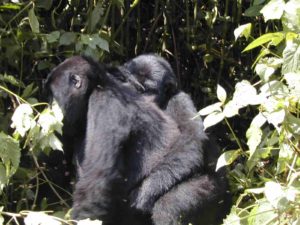
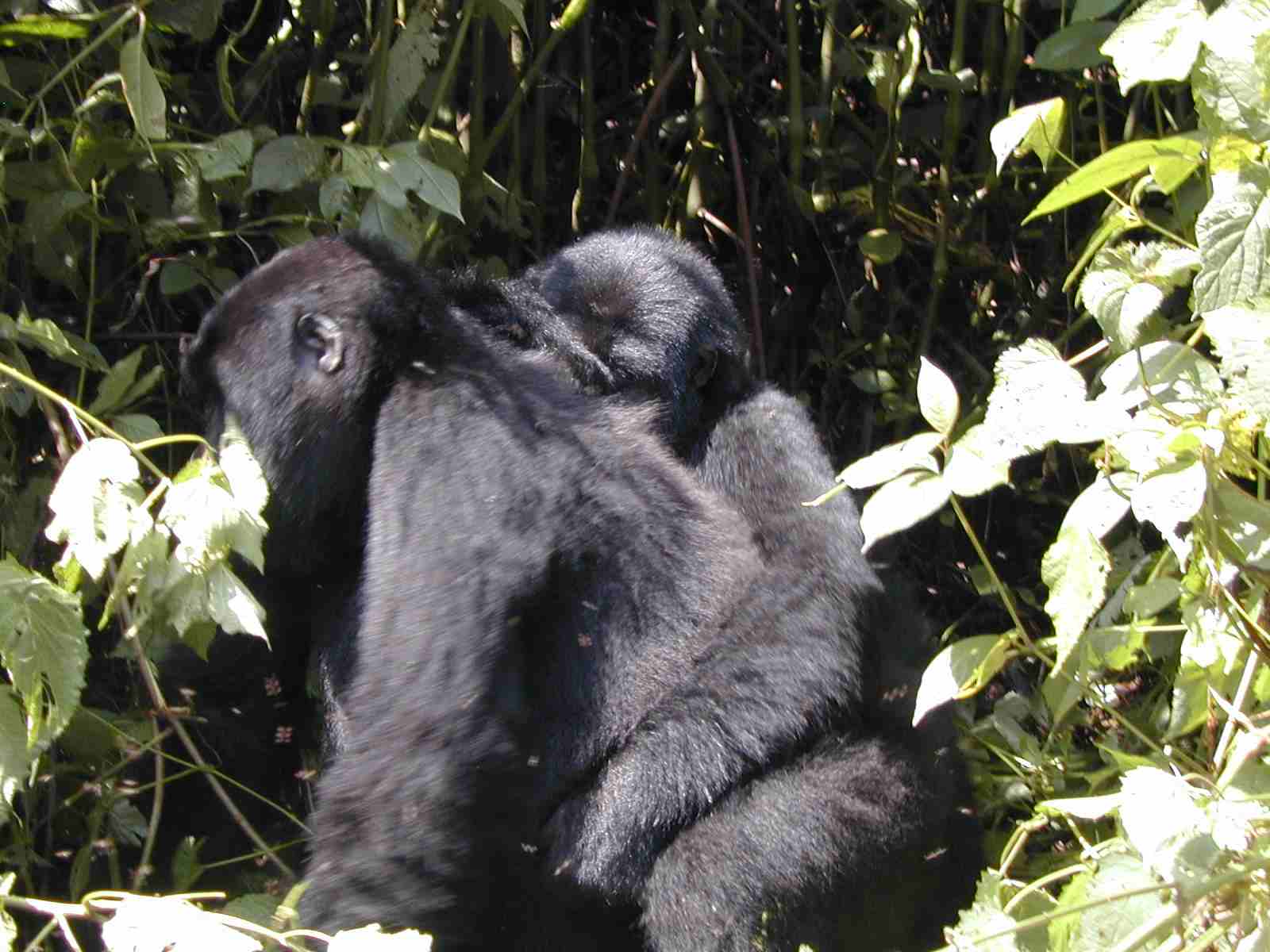
Female gorillas give birth to one infant after a pregnancy of nearly nine months. Unlike their powerful parents, newborns are tiny—weighing four pounds—and able only to cling to their mothers’ fur. These infants ride on their mothers’ backs from the age of four months through the first two or three years of their lives.

Young gorillas, from three to six years old, remind human observers of children. Much of their day is spent in play, climbing trees, chasing one another, and swinging from branches.
Females usually give birth every 4 years. Usually a single infant is born with twins being rare. There is a 40% mortality rate for newborn mountain gorillas which means that an adult female usually only has 1 surviving offspring produced every 6 to 8 years. Therefore many females will only have 2 to 6 offspring in a lifetime.

In captivity, gorillas have displayed significant intelligence and have even learned simple human sign language.

Do you wish to trek the mountain gorillas in the Democratic Republic of Congo?  Here are some Virunga Gorilla Trekking Tours and Adventures for you:

Congo Nyiragongo Volcano Climbing (from Kigali) – 3 Day

Uganda Rwanda & Congo Gorilla Chimps Tracking | Nyiragongo trek Safari – 10 Days

Rwanda Congo Mountain Gorilla Trekking, Nyiragongo Climbing- 6 Days

Rwanda Congo Gorilla Trekking Tour – 6 Days

Congo Virunga Gorilla Trekking, Nyiragongo Hike – 4 Days