
Uganda Gorilla Chimps Trekking, Rwanda Primates, Serengeti-Ngorongoro, Zanzibar - 16 Days
Day 1: Arrival in Uganda, transfer to Entebbe
Accommodation options available (all on a full board basis)
Upmarket: Hotel No. Five Entebbe
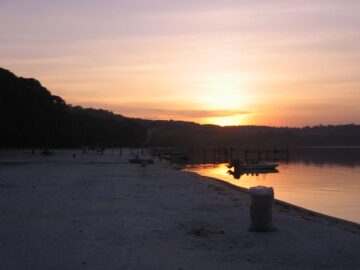
Moderate: Calm Waters Ecolodge, Lake Victoria - Entebbe.
Day 2: Track the Shoebill Stork in Mabamba, transfer to Kibale National Park
Our guide meets you from your hotel in Entebbe at 06:30 AM for a visit to Mabamba Swamp, where you have a chance to track the legendary shoebill stork. Afterwards, we drive westwards towards Fort Portal to the Kibale Forest National Park (about 5 hours).
Traveling on both asphalt and unpaved roads, you pass through traditional Ugandan villages where you see people at work tending their traditional crops of millet, sorghum, beans, and maize. The lush rolling hills of this region provide good photo opportunities.
As you approach Fort Portal in the foothills of the Rwenzori Mountains, you enter Uganda's famous tea plantation region. A carpet of green spreads before you, as far as the eye can see, and seems an unusual contrast to the countryside through which you have just passed.
You arrive at Fort Portal, then continue toward Kibale Forest, one of the great African rainforest research reserves.
Accommodation options available (all on full board basis)
Up-market: Kyaninga Lodge | Crater Safari Lodge | Ndali Lodge
Moderate: Isunga Lodge | Kibale Forest Camp (ensuite safari tents)
Day 3: Chimpanzee Tracking in Kibale National Park & Bigodi Wetland Sanctuary
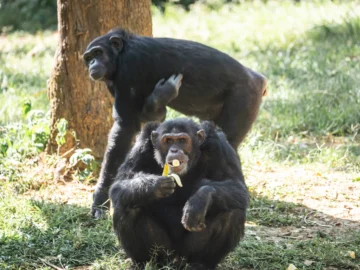
Assemble at Kanyankyu River camp at 08:00 hours to go for the most popular activity in this park, which is chimpanzee tracking.
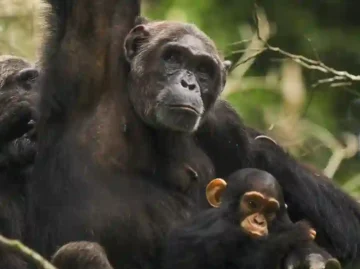
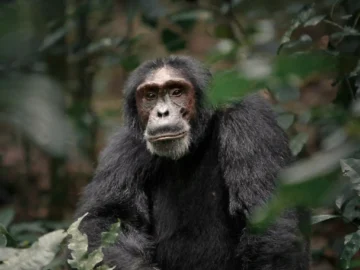
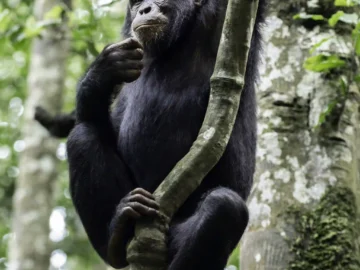
Chimpanzees are man’s closest cousins, though they are one of the most threatened primate species. More primates like black and white colobus monkeys, L’Hoest monkeys, grey-cheeked mangabey, red-tailed monkeys, bush babies, pottos, and many bird species like the yellow-spotted nicator, rumped tinker bird, little greenbul, green-breasted pitta, the crowned eagle, black bee-eater, and mammals like elephants can be seen on this walk.
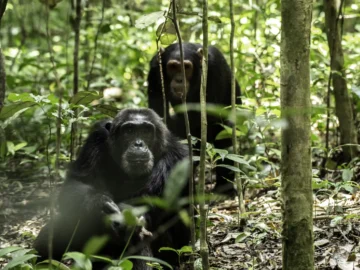
Kibale National Park, which averages about 3,300 feet in elevation, is an extension of the great rainforests of central Africa. It is inhabited by three large communities of chimps, each numbering more than 100 individuals. Each community has a complicated social structure. The big adult males dominate the group and defend the community territory against incursions by male outsiders; the females usually wander in small family groups.
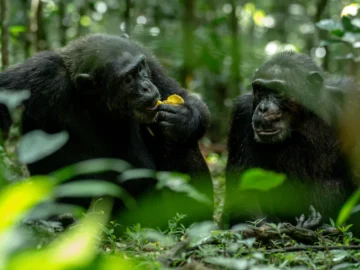
Typically, we locate the chimps by listening for their pant-hooting calls, then hustle to the area from which they are calling. We get to observe them as they feed in fruiting trees, lounge, and socialize with each other, or even, occasionally, hunt. In the afternoon, we visit a nearby forest swamp that is excellent for viewing primates and other forest animals. At the Eastern edge of Kibale Forest is Bigodi Wetland Sanctuary, which is maintained by the local community. You can expect to see birds like the great blue turaco, blue monkeys, baboons, otters, mongooses, bushbucks, bush pigs, and others.
Accommodation options available (all on a full board basis)
Up-market: Kyaninga Lodge | Crater Safari Lodge | Ndali Lodge
Moderate: Isunga Lodge | Kibale Forest Camp (ensuite safari tents)
Day 4: Bwindi Impenetrable National Park
Depart early morning for Bwindi for your gorilla trek.
Uganda Gorilla Trek Accommodation options (all on full board basis)
Up-market: Mahogany Springs Lodge | Buhoma Lodge | Nkuringo Gorilla Lodge, Bwindi| Chameleon Hill Lodge
Moderate: Ichumbi Gorilla Lodge| Buhoma Havens Community Lodge
Day 5: Gorilla Trekking in Bwindi Impenetrable National Park
Today, enjoy gorilla trekking in Bwindi.
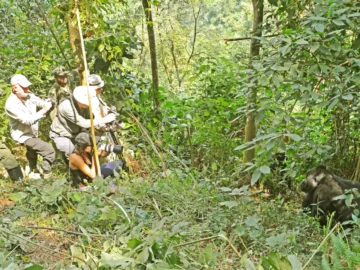
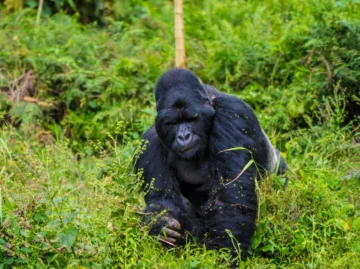
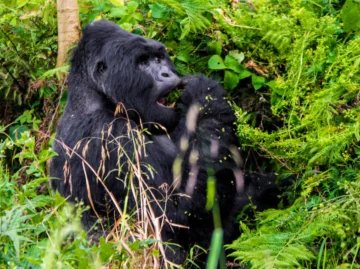
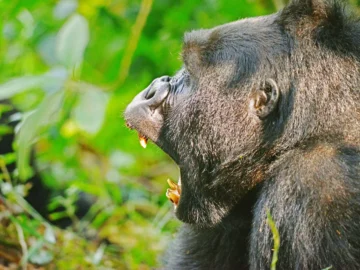
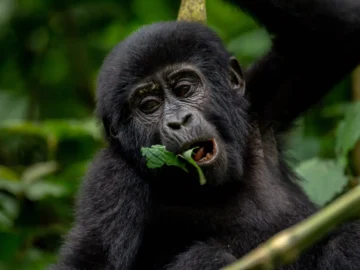
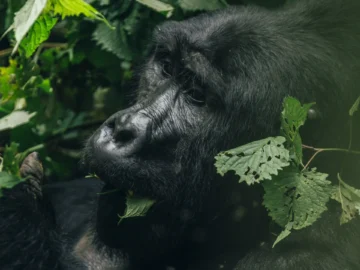
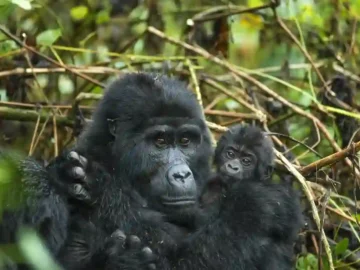
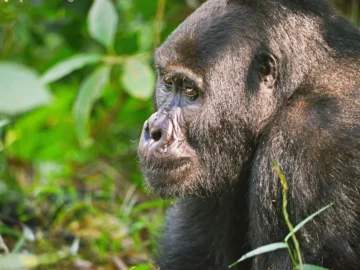
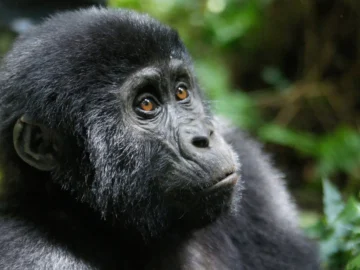
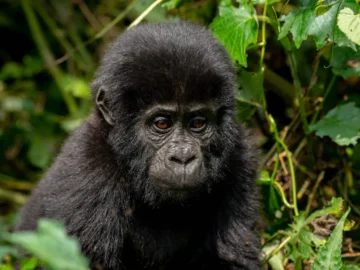
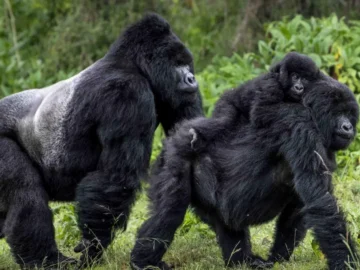
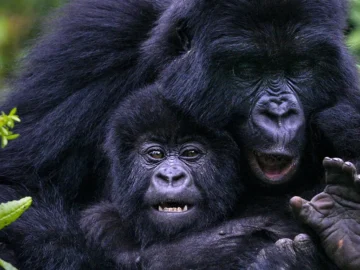
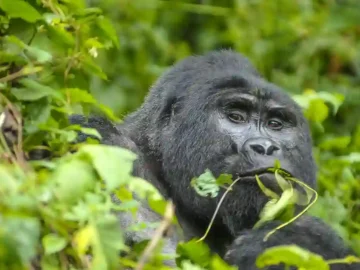
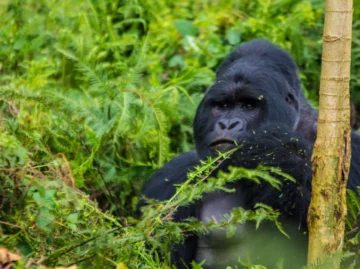
After breakfast, proceed to the morning briefing before enjoying the highlight of the trip - gorilla trekking, which may last the entire day. We trek the gorillas through the rainforest and bamboo-covered slopes, accompanied by a guide and gorilla trackers, in search of a mountain gorilla family. The walking can sometimes be tough and long, but when you catch a glimpse of the magnificent silverback, any discomfort will be quickly forgotten. When the gorillas are sighted, visitors will be guided to within 6 metres of the gorillas and sit around them for a whole hour while gazing into their big, round eyes.
Gorilla trekking is unpredictable. It's difficult to foresee how many hours you will hike. The gorilla tracking excursion can take from 2 up to 8 hours. Expect to walk along distance in steep and muddy conditions, sometimes with rain overhead, before you encounter any gorillas. Good physical condition is recommended. For conservation purposes, time spent with the gorillas is limited to one hour. A ranger will brief you on how to behave with the gorillas.
While most of today's forests are no more than 12,000 years old, Bwindi's vegetation has been weaving itself into tangles over at least 25,000 years, in the process accumulating a lengthy species list. This includes 310 species of butterflies, 51 reptiles, 200 trees, 88 moths and an exceptional 120 types of mammals, including 10 primates. The latter includes chimpanzees, L'Hoest's, red-tailed and blue monkeys, black and white colobus, baboon, and Bwindi's most famous resident, the mountain gorilla.
Bwindi is a prime destination for birdwatchers. Its 350 species include seven that are IUCN Red List-listed and 90% of all Albertine rift endemics, species which are difficult or impossible to see in any other part of East Africa.
Uganda Gorilla Trek Accommodation options (all on full board basis)
Up-market: Mahogany Springs Lodge | Nkuringo Gorilla Lodge Bwindi Buhoma Lodge |Chameleon Hill Lodge
Moderate: Ichumbi Gorilla Lodge| Buhoma Havens Community Lodge
Day 6: Half-Day Canoe Trekking on Lake Bunyonyi, Transfer to Rwanda
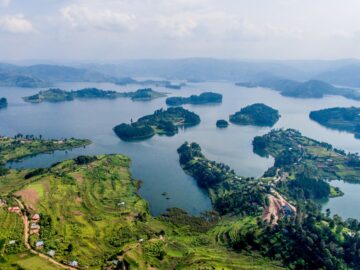
After breakfast, we drive to Lake Bunyonyi. On arrival, set out for a 5-hour canoe trek as well as bird watching on the beautiful Lake Bunyonyi, traversing to the gorgeous Kyabahinga peninsula.
Here you will be gladly welcomed with songs plus dances by the resident school children. You will enjoy with the locals at least a cup of “Obushera,” which is a local brew.
You will ascend the Kyabahinga slopes, having a wonderful opportunity to enjoy the birdlife and the verdant terrain. The view is very breathtaking! The guide will certainly brief you about the history of the area. Among the bird species you will see are the Dusky Turtle Dove, the Handsome Francolin, and the Alpine Chat.
A renowned herbalist who is a traditional healer, Omugurusi Jeremiah, based on the hilltop, will disclose to you some of the secrets about the flora on the tropical highland.
You will then cross the border via the Kyanika border post.
Located in the far north-west of Rwanda, Parc des Volcans is home to the steep slopes of this wonderful mountain range – home of the rare mountain gorilla – and the rich mosaic of montane ecosystems, which includes evergreen and bamboo forest, open grassland, swamp and heath.
Accommodation options available
Up-market: Mountain Gorilla View Lodge
Moderate: Le Bambou Gorilla Lodge
Day 7: Golden Monkey Tracking in Volcanoes National Park
Early morning, go to the park headquarters, pick your guide, and go to track the golden monkeys. The Golden Monkey may not be the most well-known primate, but is certainly an enjoyable, little creature that is worth visiting. It is a small, curious monkey, golden in color, and loves to scamper around the trees. Golden monkeys are named after their golden-orange fur, and like mountain gorillas, are also considered an endangered species. Golden monkeys are primarily found in the bamboo forest that skirts the lower slopes of the volcanoes. They are more active in the bamboo canopy. Golden monkeys are opportunistic feeders. What they feed on could be determined by the availability of fruits, leaves of bamboo trees, shoots of bamboo, shrubs, flowers, and invertebrates, and this makes it restricted to highland forest, mostly the bamboo forest.
Day 8: City tour of Kigali, transfer to Tanzania for more safaris
We depart from the hotel and drive for about 2 hours to Kigali city. Your tour guide will take you for a city tour, which includes, among others, the Gisozi genocide memorial site. Here, you will learn and comprehend the history of genocide in Rwanda and other countries of the world. We then transfer you to Kigali International Airport for your flight to Kilimanjaro International Airport in Tanzania. From Kilimanjaro Airport, another of our representatives shall meet with you and transfer you to your hotel in Arusha.
Accommodation options in Arusha
Up-market: Mount Meru Hotel, Arusha
Moderate: Green Mountain Hotel
Day 9: Arusha to Tarangire National Park
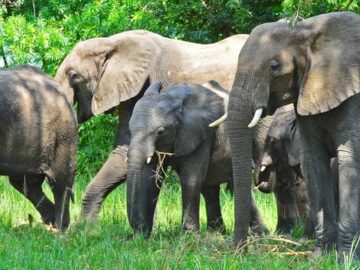
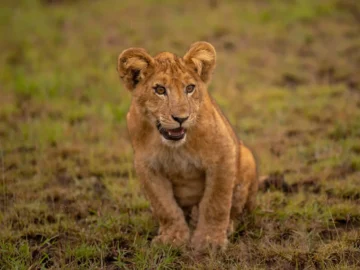
You will be picked up at the airport and transferred directly to the Tarangire National Park, where you can marvel at the colossal termite mounds and the ancient baobab trees. The picturesque scenery and diverse birdlife assist in creating the tranquil ambiance of the Tarangire National Park. The great elephant population is an extremely remarkable sight. African elephants are the largest land mammals, and adult males can weigh as much as seven tonnes. Tarangire’s varied wildlife includes lions, giraffes, warthogs, ostriches, impalas, cheetahs, mongooses, buffaloes, and baboons.
We will leave from Arusha in the morning and travel to the Tarangire National Park, where you can marvel at the two-story-high termite mounds and the “upside-down” giant baobab trees. The aesthetic scenery and cornucopia of birdlife assist in creating the unequivocally peaceful ambiance of the Tarangire National Park. In addition, the African elephant population, over 300 strong, is an extremely remarkable sight. African elephants are the largest living land mammals, with adult males weighing in at seven tons. Other animals endemic to Tarangire’s savannah include the hardy African lions, giraffes, toothy warthogs, ostriches, impalas, agile cheetahs, mongooses, water buffalo, and red-bottomed baboons.
Accommodation options in Tarangire
Up-market: Tarangire Safari Lodge
Moderate: Eileen’s Tree Inn Lodge
Day 10: Tarangire National Park to Serengeti National Park
A delicious breakfast showcasing local and organic products will be served at camp, followed by a breathtaking drive to the Serengeti National Park. We will take the scenic route to Serengeti, allowing for an amazing, bird’s-eye view of Ngorongoro Crater. There is a high likelihood of spotting game on the drive. The endless golden savanna, contrasted with the vibrant patterns of zebras, lions, and elephants, makes it easy to understand why the Serengeti is one of the Seven Natural Wonders of Africa. We will stop for a picnic lunch on the most famous kopje (a small hill in a generally flat area) in the park, allowing visitors to experience the vastness of the Serengeti from atop the hill. We will proceed further into the Serengeti for a leisurely game drive where you will likely view herds of giraffes, elephants, and zebras. You will spend the night at the Serengeti, where you will fall asleep to the mighty chorus of zebras, lions, and gazelles.
Accommodation options in Serengeti
Up-market: Serengeti Serena Lodge
Moderate: Serengeti Heritage Tented Lodge
Day 11: Full Game Drive Serengeti National Park.
The day will begin in the center of the majestic Serengeti. After a nourishing breakfast, we will continue our journey into the plains. Since we have a full day of game driving, you will likely view hundreds of the diverse animals that find their home within the Serengeti’s endless plains. This day will likely offer sightings of the African mammals that make the park famous- lions, leopards, elephants, cheetahs, and water buffalo, all within a few feet of the jeep. Visitors will also have the chance to view some of the park's known, but equally majestic animals, including elands, hyenas, gazelles, crocodiles, giraffes, zebras, monkeys, baboons, hippos, rhinos, and antelopes. Depending on the time of year, visitors will also have the chance to view thousands of zebras and wildebeest on their Great Migration. The hundreds of bird species, both endemic and migrating from the Eurasian region, are a special bonus for bird-watchers. Guests will enjoy a fresh and delicious dinner, another spot well-known for animal sightings.
Accommodation options in Serengeti
Up-market: Serengeti Serena Lodge
Moderate: Serengeti Heritage Tented Lodge
Day 12: Serengeti National Park to Ngorongoro Crater
Today is our last game drive in the Serengeti before we continue to Ngorongoro Crater. We will overnight at the crater; a deal for watching the gorgeous sunset expands over the savannah within the caldera.
Accommodation options in Ngorongoro
Up-market: Ngorongoro Serena Lodge
Moderate: Anga’ta Tinted Lodge
Day 13: Ngorongoro Crater Game Drive, Transfer to Zanzibar via Arusha
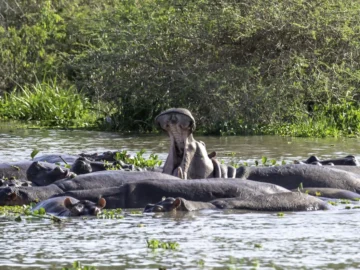
We will depart for the Ngorongoro Crater early in the morning, as early mornings provide an opportune time to spot game, especially within the “Big 5”. The group comprises some of the strongest animals in Africa – the ferocious lion, the mighty elephant, the stealthy leopard, the charging rhino, and the strong water buffalo. We will enjoy a leisurely game drive in the morning and have a picnic lunch near a pond full of hippos inside the crater. As we enjoy our snacks and sandwiches, we will be able to watch the hippos splash around. An interesting fact about Ngorongoro Crater is that it provides a unique haven for animals, which thrive within the protective shelter provided by the high walls of the caldera. The Crater was formed millions of years ago when a large volcano erupted, collapsing the volcano but leaving a perfectly unbroken crater. It is the only one like it in the world. Within the Ngorongoro Crater drive, visitors can definitely expect to encounter zebra, hippo, wildebeest and cackling hyenas. Similarly, the Crater is home to flocks of graceful flamingos lounging at Soda Lake and vultures and hawks eagerly circling the sky in search of a hardy meal of discarded carcasses. Storks, ibis, and cranes are popular water birds in the crater.
Zanzibar's islands evoke magical dreams of spices, culture, sandy beaches, and rich history. Walk through the labyrinth of streets in Stone Town, visit the ruins of the old Sultan palaces, take spice tours that awaken your senses, swim with dolphins, or just relax on beautiful beaches. Zanzibar offers it all.
Overnight at Turaco Nungwi Resort (Half board)
Day 14: Zanzibar Island - Optional activities.
You can spend your time at the hotel doing as much or as little as you choose. The beach is a fantastic place to have a stroll or read a book under the shade of a palm tree, and the shady beach bar is a great spot for unwinding during the heat of the day. There isn't a dive centre on site, but if you want to arrange a dive or snorkelling trip, just ask the managers and they can point you towards the dive centre down the beach or make the necessary arrangements for you. There are bicycles to hire, which are a fun way to explore under your own steam, too!
Overnight at Turaco Nungwi Resort (Half board)
Day 15: Full day Zanzibar for optional tours
For something completely different to the beach, you could head into Stone Town for a day trip - the town is located on the west coast, around an hour and a half away, and is a busy and fairly dusty town. However, it's full of shops and street stalls, so if you're looking to buy souvenirs, this is the best place for it, and the narrow winding streets are reminiscent of Marrakech.
Overnight at Turaco Nungwi Resort (Half board)
Day 16: Transfer back to Zanzibar Airport.
You will check out of your room this morning, but can store your bags and spend the day relaxing by the pool until you are picked up in the mid-afternoon and driven to the airport.