Rwanda Habituated Gorilla Groups and families

As of January 2015, there are 10 habituated gorilla groups which are for tourism purposes, and these are the ones that gorilla trackers visit. At maximum, 8 persons can visit each gorilla group per day spending a maximum one hour each visit. These groups include Susa group, Sabinyo, Amahoro, Group 13 (Agasha group), Kwitonda, Umubano, Bwengye, Hirwa, Karinsimbi, Ugenda.

In Rwanda, you can only track mountain gorilla in Volcanoes National Park (Parc National des Volcans), a part of the wider Virunga (mountains). At least 480 mountain gorillas inhabit this (Virunga) complex and live at altitudes ranging from 2,300-4,500 m ranging within the southern part of Virunga National Park (DRC), and the Volcanoes National Park northern Rwanda, while a few use the Mgahinga National Park, southwestern Uganda.
In Rwanda, Gorilla’s families or groups are divided into two those which are for the study/ research purposes and these are only accessed by scientists and researchers. These include: Beetsme, and Pablo’s Shida’s and have the largest number of individuals.
There are then also 10 habituated gorilla groups which are for tourism purposes, and these are the ones that gorilla trackers visit. At maximum 8 persons can visit each gorilla gorilla group per day spending a maximum one hour each visit. These groups include Susa group, Sabinyo, Amahoro, Group 13 (Agasha group), Kwitonda, Umubano, Bwengye, Hirwa, Karinsimbi, Ugenda.

1. Susa Group (Susa A Family, AKA Kurira) – the gorilla group that was famously studied by Dian Fossey.

Susa gorilla group Rwanda

It derives its name from the Susa River which flows through their home range. This family is the hardest to trek as it tends to range high into the mountains but RDB’s Tourism & Conservation trackers will know well in advance where the group is located the day before in advance for the next trackers. Sometimes tourists have been barred from tracking the group because of its distant location. This group is very impressive with a family size now of 28 gorilla members with 3 Silverbacks. It was the largest gorilla group before it split into two. The group had 42 individuals and when one visited it, all you could see where Gorillas all over. The group is well known for the young twins named Byishimo & Impano who are very playful. It also contains one of the oldest known habituated gorillas, Poppy. Born in 1976 Poppy is believed to be from one of Dian Fossey’s original gorilla groups.
Typically, a mother abandons one of the twins, as it is almost impossible for her to care for both. As we watched the mother, Nyabitondore, care for the twins, Impano and Byishimo, at times we thought she would go insane from the task. But today you can enjoy the two bouncing around and playing as if nothing ever happened.

2. Karisimbi Family (Susa-B)

This is the family that split from the Original Susa (Susa-A) family and now it’s called Susa-B or Karisimbi Group. It contains 15 individuals and it always stays in the slopes of Karisimbi Volcano (4507M). which the highest pick of Rwanda. The Karisimbi Group is better suited to visits for more serious hikers. It appears that they have established their home range high up on the slopes of the Karisimbi caldera. Thus, a visit to this group may well end up as a full-days trek. The group sometimes migrates to higher altitude and hence makes tracking difficult. However, RDB tourism and conservation guides know where to find the group a day before. Tracking this gorilla family may sometimes be prohibited because of its distant location.

3. Sabyinyo Gorilla Group

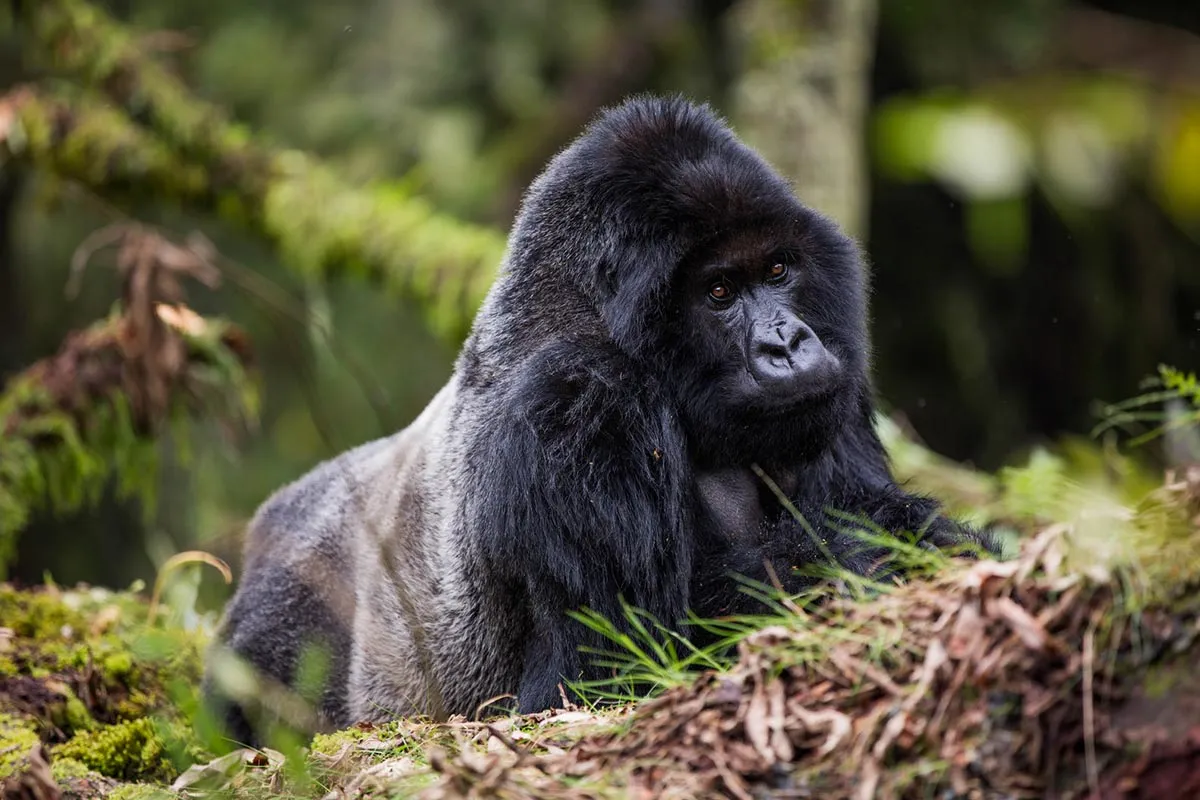
Sabyinyo is an easily accessible group led by the powerful silverback Guhonda. Guhonda, the largest silverback of all the groups, who is well known for his massive physical appearance. Guhonda has kept his main challenger, Ryango, out of his group as a lonely silverback. There are fewer members within this family than in the other groups however they are equally impressive as a family.
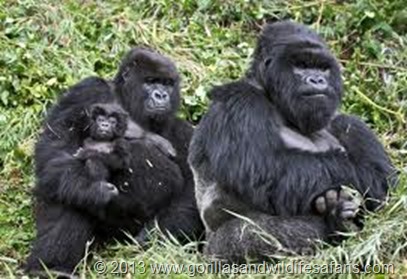
The group was named after the Sabyinyo volcano which means “old man’s teeth”. Sabyinyo is one of the groups closest to the park’s edge with 8 individuals: 1 Silverback (the biggest in the park); 3 Adult females; 1 Non adult female; 2 Juveniles and 1 Baby.

4. Amahoro Gorilla Group

Meaning “peaceful group”, Amahoro, is the most peaceful of all the gorilla groups. The group has 17 individuals: 1 Silverback; 2 Blackbacks; 5 Adult females; 2 Sub-adult males; 2 Juveniles and 5 Babies.  However, peace comes at a price. Ubumwe, the group’s silverback is so peaceful, easy going and calm, he has lost group members to Charles in the Umubano group.
To reach Amahoro one must endure a fairly steep climb, however, the climb is well worth it once in contact with this tranquil group.

5. Umubano Group

Meaning “neighborliness”, Umubano a family of 11 individuals: 1 Silverback; 1 Sub adult male; 3 Adult females and 6 Babies.Umubano were originally Amahoro members but broke off after the dominant silverback (Ubumwe) was challenged by Charles, now the leader of Umubano.

As Charles matured into a silverback of the same rank as Ubumwe, he could not stand being given orders and decided to stage a fight and challenge Ubumwe. The fight went on for weeks and then months. Finally, Charles managed to snatch from Ubumwe a few females and formed his own group; thus Umubano was formed. Since then, he has commanded respect and recognition from Ubumwe. We have observed, on various occasions, interactions between the two silverbacks, but no fighting has been seen since the great battle ended.

6. 13 Group (aka Agasha Group)

When first habituated this group had only 13 members hence its name. Now the group has approximately 25 members: 1 Silverback; 12 Adult females; 2 Sub-adult female; 3 Juvenile and 7 Babies. Formerly this group was commanded by Nyakarima who was challenged by Agashya meaning “the news”. Agashya indeed made news by first watching and estimating Nyakarima’s strengths and eventually challenging him to a fierce fight by taking off with his whole group. This was a shock to Nyakarima and an unprecedented event in observed gorilla history. Agashya then moved up the volcano to secure his group and make sure Nyakarima did not track them. Agashya has since increased his group’s numbers by snatching from other groups and assimilating other lone gorillas, rapidly increasing the group from 12 to 25 individuals.
Agashya is known, at the first sign of trouble, to take his whole group up to the top of the volcano. Once, while we were taking a group of tourists to see Group 13 this exact scenario unfolded. Agashya felt that there was another silverback who was about to challenge him. In response, he took the group up the volcano. Every time we thought we were close to see them, Agashya would move the group further uphill. We did not reach them until the very top, where we finally got a chance to see them. By the time we got back to the car we had walked for 12 hours. While it was an exhausting day, it was magical to see gorillas at the top the world.

7. Kwitonda Family

This 18-member group is led by a silverback known as Kwitonda which means “humble one” and has two silverbacks and one blackback. Having migrated from DRC, this group tends to range far making it a moderately difficult trek. Together with Susa B this is one of the difficult groups to track

8. Hirwa Group (meaning “lucky one”)

This group came into the limelight on the 17th of June 2006 when trackers witnessed its formation by the merging of some members from two different existing families, namely from Group 13 and Sabyinyo making a very small group then. As luck would have it, other gorillas joined the group and now Hirwa has 9 individuals: 1 Silverback; 3 Adult females; 2 Sub-adult females and 3 Babies.

Despite being the newest group on the block, Hirwa exhibits strength and holds its own amongst all the other established groups.

9. Bwenge Family

The family size of this group is 11 individuals with Silverback. It is mostly found on the Slopes of the Karisoke Volcano. The group is led by a silverback named Bwenge and was formed in 2007 when he left his natal group and was gradually joined by females from other groups. This group has had some hard times; this is because there were some deaths of 6 infants. However, now the group is growing strong with 2 successful births in the last few years and a strong capable silverback leader. The trek to see the group is tough and one has to hike up the hill or like 3 hours (gaining approximately 600m in elevation). The trails are sometimes muddy and very steep. Apparently, it was also the group that was featured in the movie “Gorillas in the Mist”.

10. Ugenda Family

This Group is found in Karisimbi area of Rwanda. The Family Size consists of 11 gorillas with 2 silverbacks. Its name means “being on the move” and was named because it was always moving from one area to another. Since it’s not in one place, tracking it may be somehow difficult and involves also moving from one place to another to locate them.

11. ISIMBI

14 MEMBERS | UPDATED: 13 JULY 2016

Isimbi group is found in Volcanoes National Park in Rwanda and led by the dominant Silver Back-Muturengere. Isimbi group is a result of Karisimbi group split which took place on 10th April 2012. Getty silverback took the lead of the new group of 7 individuals. Getty died on December 22nd 2013 due to abscess on air sac and pneumonia. After his death, the young blackback then, Muturengere took lead of the group with the help of Poppy, an adult female. Poppy is said to be the oldest living adult female among all gorilla groups. Muturengere fought other groups that sought to grab some members of his group. The group has since grown from 7 to 14 individuals who include 1 silverback, 6 adult females, 2 juveniles and 5 infants.
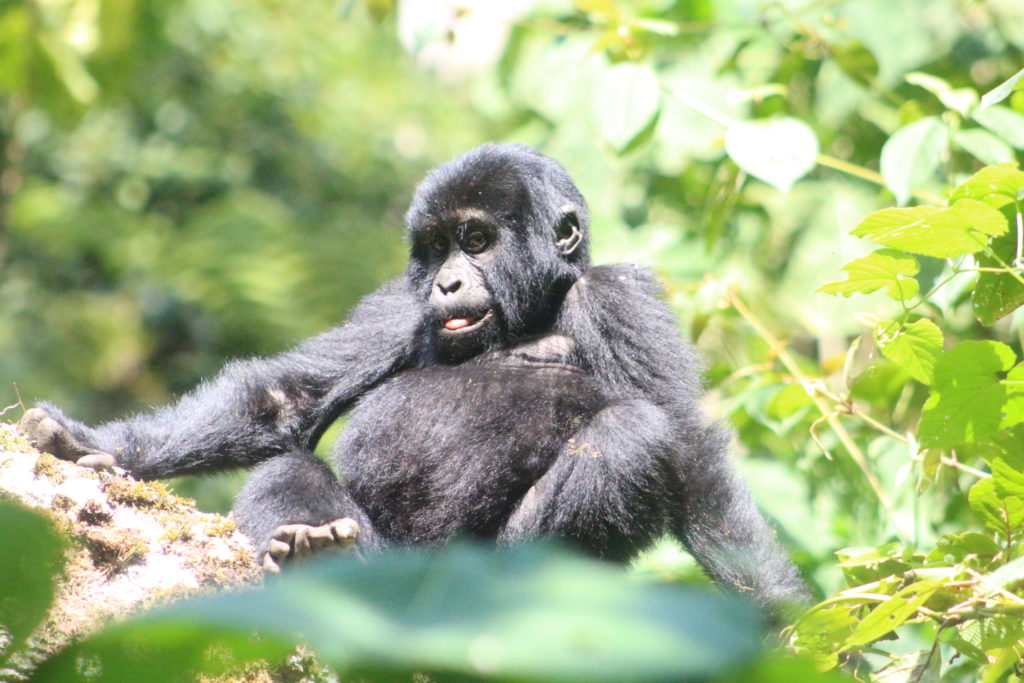
Compare Gorilla Trekking Tours in Uganda & Rwanda – Costs, experiences, etc

Uganda Rwanda Safari Gorilla Chimp Tracking

Compare Gorilla Trekking Tours in Uganda or Rwanda, Bwindi, Volcanoes NP. Is it better to Track Gorillas in Rwanda or Uganda; which is cheaper for gorilla trek tours?

We try to compare gorilla trekking tours’ experiences in costs in Uganda or Rwanda, Bwindi, Volcanoes NP.
There are about 884 mountain gorillas remaining on earth. About 55% of the mountain gorillas live in the Bwindi Impenetrable National Park of Uganda while the rest are in Virunga Mountains that straddle Rwanda (Volcanoes NP), Uganda (Mgahinga Gorilla National Park) and the Democratic Republic of Congo (Virunga National Park).

Most of the 884 gorillas live a wild existence, far from human reach but a few gorilla families range in places closer to farmland in Bwindi and Mgahinga Gorilla National Park. However, a handful of groups have been habituated and can be tracked and observed by small numbers of visitors under the watchful eyes of park scouts.

It is these habituated gorilla families that you can visit as a tourist. You will need a gorilla tracking permit to visit the mountain gorillas in an activity called gorilla tracking or gorilla trekking.  Rwanda’s Gorilla permits are 1500 USD – Uganda remains at 600 USD – and Congo at USD450 now, you have to make a choice about which country to choose for your trek and it often is based on available Financial Resources.

Rwanda raised its Permit Prices in order to help it pay the way for Gorilla Conservation, assist the local communities surrounding the trekking areas with much-needed infrastructure and to market Rwanda as an upmarket Gorilla Trekking Destination.

Uganda is not raising prices and permits remain at 600 USD while Congo is also keeping the permit price at USD450.

We run private and small group tours to all the four national parks where the gorillas are found which makes you to be the best judge in this.

There is a multitude of inaccurate information regarding Gorilla Trekking and Mountain Gorillas in Rwanda, Uganda and Congo.  Forums abound with it, Travel Writers get it wrong, Travel Agencies in Europe, North America, Australia and other parts of the world use old information, wrong facts, and wrong prices and until the recent Permit increase in Rwanda – favored Rwanda.

As locally based and run tour operators, we believe we ought to offer all the information we can about this subject so that you make the right choices for your gorilla tracking experiences.  Hopefully, it will help you to make the choice that is right for you.

Are Mountain Gorillas the same in Rwanda, Uganda and Congo?

For starters, the mountain gorillas in Rwanda, Uganda, and Congo are one and the same species. They are not any different.  They are the same mountain gorillas in Volcanoes National Park, Bwindi Impenetrable National Park, and Virunga National Park.

Where is the Best Gorilla Trekking – Rwanda, Congo or in Uganda?

Each passing day, our staff and agents in office will handle this question by email, online chats or phone calls. This is why we have created this article/ page so that we outline a few of the differences in gorilla tracking in Rwanda, Uganda, and Congo.

Undoubtedly, Rwanda has invested a lot resources in marketing as the destination of choice for gorilla tracking. Besides, the famous mountain gorilla researcher, Dian Fossey was based in Rwanda for a lot of her research time. Rwanda also invites several journalists from all over the world to document its gorilla trekking experiences; its scenery and especially its Mountain Gorillas in a positive light endearing the tiny country of Rwanda to the Travel Community around the world

On the other hand, Uganda, with more of the Gentle Primate Giants than either Rwanda or the Democratic Republic of combined (480  total 880) has not done as well as Rwanda when it comes to PR and promoting its Mountain Gorillas.  The movies “Raid on Entebbe” – “The Last King of Scotland” about Idi Amin don’t promote Uganda as a destination as does “Gorillas in the Mist” for Rwanda.

Is Uganda or  Rwanda better for Gorilla Trekking Tours

The Advantages of Gorilla Trekking in Rwanda:

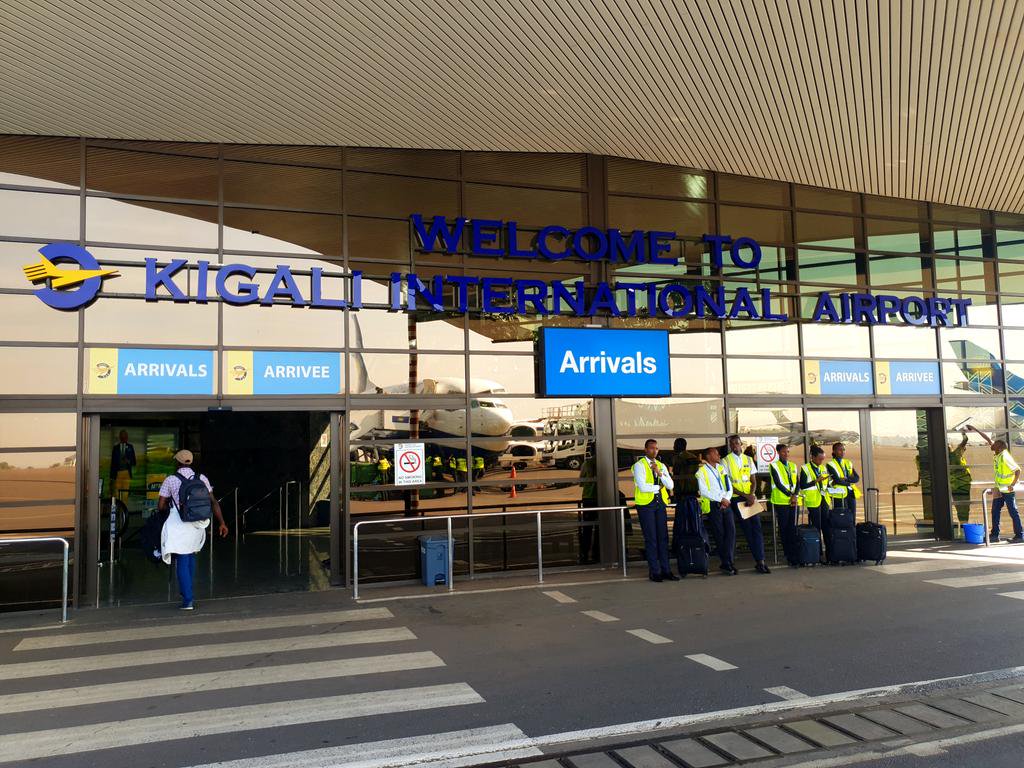
  • Short Driving Distance (2 hours from Kigali Airport_
  • Good surfaced Roads all the way to Volcanoes National Park from Kigali
  • Better Road Conditions and Cleaner.

The Disadvantages of Rwanda gorilla tracking :

  • Cost of Permits in Rwanda 1500 USD compared to Uganda at 600USD
  • Fewer choices for other wildlife experiences
  • Lodging in town – not in the Wilderness unless you choose an exclusive Lodge
  • Has limited Chimpanzee Tracking
  • Has less daily Permits than Uganda – 10 Gorilla Groups – 80 Permits
  • No Gorilla Habituation Experiences of 4 hours with gorillas like in Uganda.
  • Elevation causes some a temporary problem with some.
  • 10% of permit revenue given to local community – Uganda gives 20%
  • Rwandans have to pay the same price for Gorilla Trekking as Visitors.

The Advantages of tracking gorillas in Uganda’s Bwindi Impenetrable NP or Mgahinga Gorilla NP:

  • Most Mountain Gorillas in Africa -480 out of 884 in two National Parks of Bwindi and Mgahinga.
  • Gorilla Trekking in both Bwindi Impenetrable Forest and in the Virunga Volcanoes in Mgahinga Gorilla Park that is just like trekking in Rwanda’s Volcanoes National Park 3 hours drive from Kigali
  • More Habituated Mountain Gorillas than any other country- 15 gorilla groups habituated.
  •  Availability of Gorilla Permits all the year, with only a few days over-booked.
  • Golden Monkey trekking and Habituation Experience in Mgahinga Gorilla Park for $10 less than the $10 for Rwanda Volcanoes NP
  • Fly into Rwanda – Trek Gorillas in Uganda – 3 1/2-hour drive and save 900 USD plus
  • Spend 4 hours with a gorilla group being habituated on an all-day trek.  1500 USD
  • Lower priced permits – 600 USD in Uganda compared to 1500 USD in Rwanda
  • Plenty of higher quality lower priced Lodging including upmarket not in towns but in the Forest or overlooking the Forest.
  • The ability to offer a full primates and wildlife tour experience
  • Best Chimpanzee Tracking and all day habituation in all of Africa.
  • Mountain and Volcano Climbing including both the Virunga Volcanoes and the Rwenzori MountainsMountains
  • More adventure, hiking and White Water Rafting, Kayaking,
  • Relax and Chill out on Lake Bunyonyi, Lake Mutanda, Ssese Islands on Lake Victoria
  • A variety of Scenery such as is not found in Rwanda.
  • English is more often used in Uganda than in Rwanda.
  • More than a Gorilla Safari Destination – Big 5 – plus  Gorillas and Chimpanzees – 10 National Parks.
  • Bwindi Impenetrable Forest UNESCO World Heritage Site – May 2017-picked by CNN as one of the Best Parks in Africa
  • Ugandans – East Africans and Expats living in Uganda can do Gorilla Trekking with a lower permit price.  That changed in Rwanda in 2017.

The Cons of Uganda Gorilla trekking:

  • Long Drive times, unless one flies into Kigali and drives to Bwindi – or flies from Entebbe to Bwindi Forest or breaks drive-times by staying a night in another park such as Lake Mburo National Park.
  • Road Conditions in places are in need of improvement.
  • In-Country Flights tend to be on the expensive side, however many take advantage of the short 1 1/2 hour flight to Bwindi.
  • Not as clean as Rwanda
  • 4 Gorilla Starting Points in Bwindi Impenetrable – some find that confusing.  We take the confusion out of it.
  • Does not serve coffee at the orientation for the trek, not is a cultural dance offered for visitors.
  • Park Offices at Gorilla Trek Starting points are not as elaborate as the one in Rwanda.

Other things in addition to the actual gorilla tracking

Lastly, if you are not travelling just to see the mountain gorilla, and you want to include other activities in your visit, Rwanda may not be the best choice. Many tourists have continually had to cross to Uganda after their Rwanda gorilla trek to tour other reserves like Queen Elizabeth National Parks so endowed with abundant wildlife one cannot see in Rwanda. This is why probably folks continue enduring the long drives to Bwindi yet there is an easy way out.

At the end of the day – the ultimate jury are those who are looking as to which country to visit in order to track Gorillas – it is not Rwanda, not Uganda, not the Democratic Republic of Congo but where their pockets and hearts choose. If you precisely want the mountain gorillas and nothing else, go for a one-day gorilla trek but if you are a one who wants it and all of it, go for the long drive – you won’t regret…

Have you been on a gorilla trek in Rwanda or Uganda? What was your experience? What have you had about tracking gorillas in Rwanda Vs Uganda? Let me hear your views.

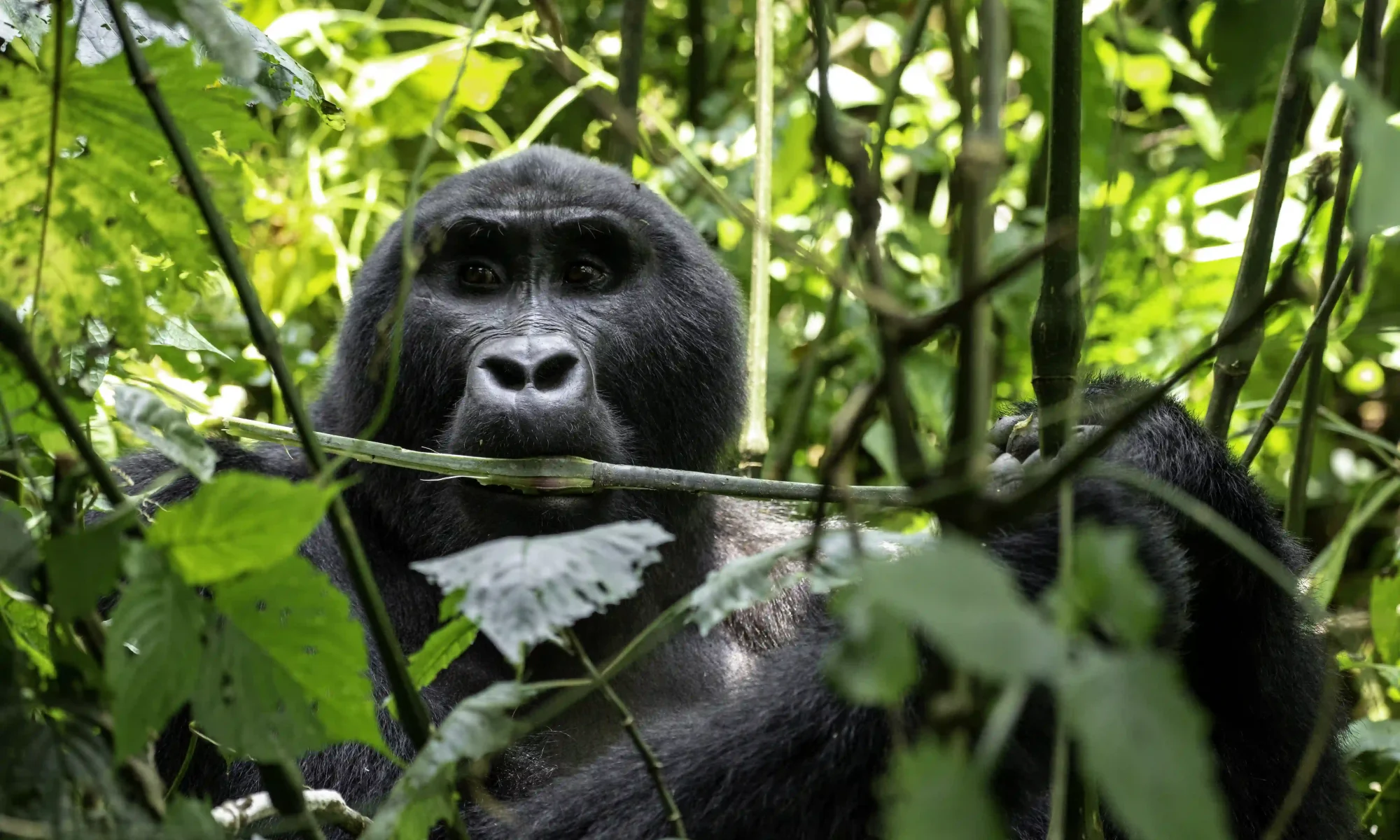
A mountain gorilla family in Bwindi Impenetrable National Park

How different is the gorilla tracking experience between Uganda and Rwanda (Comparisons)

Sabyinyo Volcano, compare gorilla trekking tours uganda rwanda congo tracking

Sabyinyo Volcano, Uganda and Rwanda

Golden Monkeys Tracking in Volcanoes National Park Rwanda 

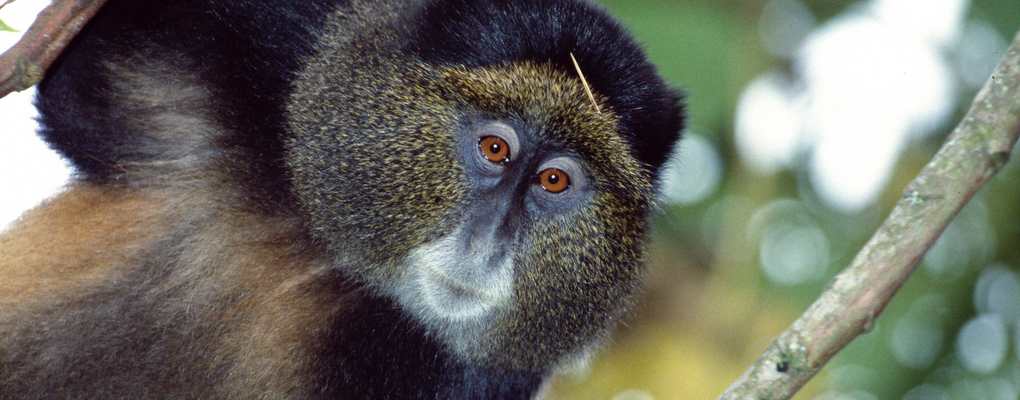
Golden Monkeys tracking is another highlight of Volcanoes National Park. The Golden Monkey (Cercopithecus Mitis Kandti) is a local subspecies of the widespread Sykes Monkey, also known as the “Blue Monkey” and is endemic to the high altitude forests of the Volcanoes National Park area. The Golden monkeys are rare species is listed as endangered. The monkeys are playful and inquisitive and often spend their time leaping from bamboo branches or frolicking on the forest floor towards the base of the volcanoes and have overcome their initial shyness to accept their daily visit by researchers and tourists.

There are two habituated groups of Golden Monkey, one group comprises around 80 – 100 members and has its home at the foot of Mt Sabyinyo.
In the same way you track mountain gorillas so will your track the golden monkeys. Treks to see the Golden Monkeys take place in the mornings and visitors are permitted to stay for 1 hour with the monkeys. Departure for the Golden Monkey trek is from the Park’s Kinigi Headquarters at 07:00am. The number of visitors is not limited and the fee for a Golden Monkey permit is currently USD$100 per person per trek. Permits can either be arranged in advance or booked at the park headquarters on the morning of the trek. Porters can be hired at the entry point of the park.

About Golden Monkey tracking

Golden Monkeys are very sprightly creatures, and leap from tree to tree which is really entertaining if a little difficult to photograph! We recommend setting your camera to a fast shutter-speed to allow for low light in the dense undergrowth and to better your chances of capturing the golden monkeys on film!
This is a great way to spend an extra day in the Volcanoes National Park and if you’re interested in wildlife, this is a rare and delightful experience not to be missed!

Also available is the ‘Dian Fossey Tomb Trail’ – a beautiful yet challenging hike to 3,000 meters up the slopes of Mount Bisoke or a hike to the beautiful Ngezi Crater Lake at the top.

Permit costs per person:

  • Mountain Gorillas: US$ 1500
  • Dian Fossey Hike: US$ 75
  • Golden Monkey Tracking: US$ 100
  • Crater Lake Hike: US$ 75

Permits should be booked 3 to 6 months in advance, especially during Rwanda’s high season of June – September.

If you would like further information or would like help booking your golden monkey permit, or would like to add golden monkey tracking to your tour program, then please either contact us for assistance.

Rwanda visa on arrival, no prior application for visa to Rwanda

Effective from 01 January 2018, nationals of all countries will get the Rwanda visa upon arrival without prior application.

Previously, one had to apply for their Rwanda visa online in advance before arriving Rwanda.

This was reached upon in the Rwanda government cabinet meeting on November 08, 2017,  that approved the establishment of the new Rwanda visa regime. The new visa regime to be implemented by the Directorate General of Immigration and Emigration has the following policies:

  1. Reciprocity – Rwanda will gat visa free on charge with 90 days validity to the following countries on reciprocal basis: Benin, Central African Republic, Chad, Ghana, Guinea, Indonesia, Haiti,  Mauritius, Philippines, Senegal, Seychelles, Sao Tome and Principe, and Singapore. This is in addition to Democratic Republic of Congo and East African Member Community Partner States.
  2. Visa waiver for diplomatic and service passports – The government of Rwanda has entered into Visa Waiver Agreement for holders of Diplomatic and Service Passports with; Djibouti, Ethiopia, Gabon, Guinea, India, Israel, Morocco and Turkey. This takes immediate effect.
  3. 3o days visa upon arrival- Citizens of all countries to get visa upon arrival without prior application, starting 01 January 2018. Before that, only nationals of African countries and few others were getting visa upon arrival.
  4. COMESA Member Stats to get 90 days visa upon arrival – Citizens of COMESA member states to get 90 days visa on arrival (on payment of the prescribed fee) as provided by Arrival 4 of the COMESA Protocol Free Movement of Persons, Labour, Services, Right of Establishment and Residence. Rwanda ratified the protocol on 13th July 2016. Currently, citizens of COMESA member states were getting 30 days on arrival as other holders of African Passports.
  5. Rwanda living abroad with dual nationality allowed to use national IDs on entry – waive visa fee to Rwandans traveling on foreign passports in possession of Rwandan Identity Card for countries that permit dual nationality only. Initially Rwandans traveling on foreign passport in possession of valid Rwanda passport were only granted visa free on arrival.
  6. Foreign residents to use their Resident ID cards for Entry –  returning residents holding valid residence permits with corresponding reticent cards will be allowed to use them on entry, including using electronic gates (Automated Passenger Clearance System) at Kigali International Airport.

RWANDA VISA FEES:

These are fees for processing of applications. If applications are refused, or withdrawn by the applicant, refunds of fees will not be made.

Transit Visa – USD30

Entry Visa – USD30

Tourist Visa – USD50

Tourist Group (4-10 persons) – USD100

East Africa Tourist Visa – USD100

Diplomatic / Official Visa – Free

VALIDITY OF A RWANDA VISA:

The maximum and minimum period of validity of a visa is set out in the Information for Applicants for each visa class.

SINGLE OR MULTIPLE ENTRIES:

Whether a visa is issued for single or multiple entries is set out in the Information for Applicants for each visa class.

FINANCIAL REQUIREMENTS:

An applicant must have sufficient funds to cover the costs of their stay in Rwanda. Evidence for such funds may be requested online, at the Rwandan foreign mission or at the entry point.

Extension of a Visa for Some Classes:

Some visa classes may be extended. Details are set out in the Information for applicants for each class.

Extension of a visa should be applied for whilst initial visas remain valid.

A grace period of 5 days after a visa has expired is allowed for a person to either depart or renew their visa without a penalty, otherwise the person will be subjected to a penalty and may be refused a visa extension.

CHANGE OF STATUS FOR SOME CLASSES:

An applicant may apply to the Director General for another class of visa whilst they are in Rwanda and whilst their current visa remains valid.

For the group tourist visa change of status is not permitted. Information for applicants for the particular visa class will state if change of status is not allowed.

INSTRUCTIONS ON YELLOW FEVER PREVENTION MEASURES

While Rwanda is Yellow Fever free, following the current active outbreak of Yellow Fever in Angola and the documenting of imported cases in some countries, the Rwandan Ministry of Health is implementing measures to prevent the import of Yellow Fever cases and therefore protect the health of residents and visitors.

The following instructions are delivered to inform public and travelers:

1. To enter in Rwanda, a Yellow Fever vaccination certificate is not required for travelers (Residents/ Non-Residents) coming from Yellow Fever non-endemic countries and without an active transmission outbreak of Yellow Fever.

2. To enter in Rwanda, a valid Yellow Fever vaccination certificate is mandatory for travelers (Residents/ Non-Residents) coming from Yellow Fever endemic countries1 and countries2 with active Yellow Fever transmission outbreaks.

3. All residents travelling to Yellow Fever endemic countries1 should be vaccinated at least 10 days before travelling.

4. For travelers (Resident/ Non-Resident) coming from an active Yellow Fever transmission outbreak country2 or travelers who have recently visited (within 24 days) an active Yellow Fever transmission outbreak country2 the following instructions will be applied:

Yellow Fever endemic countries1: Angola, Argentina, Benin, Bolivia Plurinational, Brazil, Burkina Faso, Burundi, Cameroon, Central African Republic, Chad, Colombia, Congo, Côte d’Ivoire, Democratic Republic of the Congo, Ecuador, Equatorial Guinea, Ethiopia, French Guiana, Gabon, Gambia, Ghana, Guinea, Guinea-Bissau, Kenya, Liberia, Mali, Mauritania, Niger, Nigeria, Panama, Paraguay, Peru, Senegal, Sierra Leone, South Sudan, Sudan, Suriname, Togo, Trinidad and Tobago, Uganda, Venezuela

Pros & Cons of Uganda Gorilla Trek tours – Gorilla Safaris Uganda Advantages

The Pros  – Advantages of doing gorilla tours, gorilla trekking  Uganda’s Bwindi Impenetrable NP or Mgahinga Gorilla NP:

  • Most Mountain Gorillas in Africa -480 out of 884 in two National Parks of Bwindi and Mgahinga.
  • Gorilla Trekking in both Bwindi Impenetrable Forest and in the Virunga Volcanoes in Mgahinga Gorilla Park that is just like trekking in Rwanda’s Volcanoes National Park 3 hours drive from Kigali
  • More Habituated Mountain Gorillas than any other country- 15 gorilla groups habituated.
  • Availability of Gorilla Permits all the year, with only a few days over-booked.
  • Golden Monkey trekking and Habituation Experience in Mgahinga Gorilla Park for $10 less than the $10 for Rwanda Volcanoes NP
  • Fly into Rwanda – Trek Gorillas in Uganda – 3 1/2-hour drive and save 900 USD plus
  • Spend 4 hours with a gorilla group being habituated on an all-day trek.  1500 USD
  • Lower priced permits – 600 USD in Uganda compared to 1500 USD in Rwanda
  • Plenty of higher quality lower priced Lodging including upmarket not in towns but in the Forest or overlooking the Forest.
  • The ability to offer a full primates and wildlife tour experience
  • Best Chimpanzee Tracking and all day habituation in all of Africa.
  • Mountain and Volcano Climbing including both the Virunga Volcanoes and the Rwenzori MountainsMountains
  • More adventure, hiking and White Water Rafting, Kayaking,
  • Relax and Chill out on Lake Bunyonyi, Lake Mutanda, Ssese Islands on Lake Victoria
  • A variety of Scenery such as is not found in Rwanda.
  • English is more often used in Uganda than in Rwanda.
  • More than a Gorilla Safari Destination – Big 5 – plus  Gorillas and Chimpanzees – 10 National Parks.
  • Bwindi Impenetrable Forest UNESCO World Heritage Site – May 2017-picked by CNN as one of the Best Parks in Africa
  • Ugandans – East Africans and Expats living in Uganda can do Gorilla Trekking with a lower permit price.  That changed in Rwanda in 2017.

The Cons of Uganda Gorilla trekking/ Uganda gorilla tours:

  • Long Drive times, unless one flies into Kigali and drives to Bwindi – or flies from Entebbe to Bwindi Forest or breaks drive-times by staying a night in another park such as Lake Mburo National Park.
  • Road Conditions in places are in need of improvement.
  • In-Country Flights tend to be on the expensive side, however many take advantage of the short 1 1/2 hour flight to Bwindi.
  • Not as clean as Rwanda
  • 4 Gorilla Trek Starting Points in Bwindi Impenetrable – some find that confusing.  We take the confusion out of it.
  • Does not serve coffee at the orientation for the trek, not is a cultural dance offered for visitors.
  • Park Offices at Gorilla Trek Starting points are not as elaborate as the one in Rwanda.

Summing Up

Although this site is about gorilla trek and gorilla safaris in Uganda and Rwanda, we really have tried to give as balanced a picture as possible. If it seems to you, after reading this page, that we have skewed toward the favorable, it is not our intention to.  The sole consequential drawback about gorilla trekking or Uganda gorilla safaris is mainly the long drive from the arrival airport (Entebbe) to the gorilla trek destinations —which is not an inherent flaw, because it is possible to arrive in Kigali (Rwanda) and drive to Bwindi (for about 4 hours) for your gorilla tour in Uganda.

(And don’t forget to see our gorilla tour packages page. for plenty of gorilla tour options for gorilla safaris in Uganda, gorilla tours in Uganda, or Uganda Rwanda gorilla tours packages.

You can now explore the rest of this site as you please, but if you want to jump straight to some hard data on gorilla trek tours/ gorilla safaris in Uganda.

Kalinzu Forest Reserve–A Natural Forest beaming with Kalinzu Chimps, Primates

Kalinzu Forest has a  95% Chimpanzee Trekking Success with the fee being –40 USD for the permit for  Chimpanzee Trekking in Kalinzu. Kalinzu Forest is located in Bushenyi district of Uganda. Kalinzu forest is approximately 375 km. (five hours drive) from the Capital City of Kampala. and about 30 minutes driving from Queen Elizabeth National Park on the way to Mbarara.

Essentially an eastern extension of the Maramagambo Forest, the 137km² Kalinzu Forest Reserve is traversed by a number of scenic trails along the ridges and valleys of the Rift Valley Escarpment, offering views of the Rwenzoris, Lake Edward and the Kazinga Channel.
The Forest is famous for 414 Species of Trees and Shrubs including the Ficus, Prunus Africana, the Stroboia, and Parinari among others.
In addition to an alluring variety of forest birds, Kalinzu protects six diurnal primate species: chimpanzees, olive baboon, black and white Colobus and red-tailed, blue and L’Hoest monkey, as well as the rare pygmy antelope. Nocturnal primates such as potto, and two varieties of galago can be sought on night walks, when you are also likely to hear the eerie shrieking of the tree hyrax.
The 2001 Primate Census put the total number of Chimpanzees in the Reserve at approximately 240. However, only two Groups of about 70 can be accessed by both Researchers and Tourists.
The Forest also harbours 378 Species of Birds such as the Great Blue Turaco, Black and White Casket, Cuckoos and Sunbirds.
Other varieties of Species include 262 Butterflies, 97 Moths, Reptiles and Flowers.
Because of its proximity to the Queen Elizabeth National Park, the Forest Reserve occasionally provides refuge to Savannah Grassland Species such as the Duikers, Leopards and Wild Pigs.

Tourist Activities in Kalinzu Forest

Tourist activities in the Reserve include
· Chimps tracking in Kalinzu allowing 4 visitors per day at US Dollars 40 per person..
· Forest Walks,
· Conservation Education,
· Birding,
· Butterfly Identification,
· and small Mammal viewing.

How to Get to Kalinzu Forest for Chimps trekking

Kalinzu Forest Reserve is located in Bushenyi District in western Uganda. It is approximately 375 km. (six hours drive) from the Capital City of Kampala. Because of the Albertine Terrain with old logging and winding roads, a four – wheel drive vehicle is recommended.

Accommodation while at Kalinzu

Accommodation in the Reserve is still informal with only a do-it- yourself Camping Site at the Forest Station at Nkombe. Visitors are advised to carry their own Tents. Visitors can also seek modest accommodation in Bushenyi/Ishaka Townships.
For Reservations, please contact the Range Manager on Tel: 256-41-0772 458389

When is the Best time for gorilla trekking/ tracking in Rwanda and Uganda?

While tracking or trekking mountain gorillas can be done any time of the year in either countries where (mountain gorillas are found i.e Rwanda and Uganda), because of the relatively wetter/ rainy seasons in the mountain gorilla inhabited national parks, many tourists often prefer the months from June to September and then December, January and February.

In Rwanda, the first rains start coming in late February through March, April and May and so many tourists try to avoid these months for fear of getting muddy and all wet while tracking the gorillas. However, during these months, because of the rains there’s plenty of gorilla food down slope and it’s much colder on the upper slopes. So the mountain gorillas keep on the lower slopes where they find it warmer and get food easily. So if you track the gorillas during these months, most likely your trek won’t be a long one – many trackers find the gorillas after 2 hours hike and by 2PM are back.
The same applies to Uganda although the rains there come in March, April and May. Of course the  Undeniably the rains (not always heavy though) make it rather harder to trek the steep terrains. Even then, the rain only comes for like 1-2 hours in like every 2-3 days and the sun comes out. We have noticed that even in the so-called drier months, the rain will often come in.

This seasonality of gorilla trackers can also be attributed to the weather seasons in the visitors’ home country and the nature of their jobs. When it summer for example in Europe, numbers of gorilla trek visitors increase and the gorilla trackers numbers dip when it’s winter.
However, there are other gorilla trekkers who often take advantage of the seasonal discounts on mountain gorilla tracking permits. Recently for example, the Uganda Wildlife Authority discounted the gorilla permits by 30% for non-resident foreigners.

Several accommodation and lodging facilities in mountain gorilla inhabited areas will also make discounts on their rates during these same months.

Whatsoever the case and explanation may be, experience shows that mountain gorilla trekking can be done any time of the year and you will most likely get the same the same experience.

Bwenge Gorilla Group– A mountain gorilla group in Volcanoes National Park, Rwanda

Gorillas and Wildlife Safaris

Bwenge gorilla group derives its name from the silverback gorilla leader, Bwenge, The family size of this group is 11 individuals with Silverback. It is mostly found on the Slopes of the Karisoke Volcano. The group is led by a silverback named Bwenge and was formed in 2007 when he left his natal group and was gradually joined by females from other groups. This group has had some hard times; this is because there were some deaths of 6 infants. However now the group is growing strong with 2 successful births in the last few years and a strong capable silverback leader. The trek to see the group is tough and one has to hike up the hill or like 3 hours (gaining approximately 600m in elevation). The trails are sometimes muddy and very steep. Apparently it was also the group that was featured in the movie “Gorillas in the Mist”.

Mountain Gorillas Trekking Aside, Why Does Earth need Bwindi so badly?

What else is there in Bwindi apart from mountain Gorilla trekking? What else can one do in Bwindi apart from tracking mountain gorillas; why is Bwindi an IUCN World Heritage site?

With an ever growing importance now being attached to tourism development in East Africa, each country is trying to find a niche tourist attraction where they have competitive advantage over the other.

In Uganda, the endangered mountain gorilla is the flag bearing attraction. Thousands of tourists (largely foreigners) come to Uganda every year for tours to track (or trek) these mountain gorillas.

Almost a half of the remaining 780 mountain gorillas on earth inhabit the impenetrable Bwindi National Park, the rest being scattered in the Viungas (shared by Rwanda, Uganda and DRC). This makes Bwindi a very important region for tours in Uganda. Almost the entire Uganda tourism industry has a bearing with Bwindi. Tourists who come for gorilla tours frequently end up visiting other national parks in Uganda as well.

This brings us to the question, Besides the mountain gorillaswhat’s so special with Bwindi to the extent that the IUCN declared is a World Heritage Site?


Bwindi is characterized by steep hills and narrow valleys with a general incline from the north and west to the south-western corner. Together with some remnant lowland forest outside the boundary, the park constitutes an important water catchment area serving the surrounding densely populated agricultural land.

With an area of 32,092ha and an altitudinal range of 1,I 90-2,607m, Bwindi is one of the few large expanses of forest in East Africa where lowland and montane vegetation communities meet. Combined with its probable role as a Pleistocene refuge, the forest hosts an extremely high biodiversity.

Bwindi is the most diverse forest in East Africa for tree species (more than 163 species) and ferns (more than 104 species), as well as other taxa. The trees account for 38% of the total recorded for the country and include 10 species not found elsewhere. A further 16 species have only a very restricted distribution in south-west Uganda, and one species, Lovoa swynnertonii, is globally threatened .

Bwindi has one of the richest animal-life communities in East Africa, including over 214 species of forest bird (> 65% of the Uganda’s total), 7 species of diurnal primate (58% of the country’s total), and 202 species of butterfly (84% of the country’s total).

Highly significant is the presence of almost one half (380 of about 780) of the world’s population of mountain gorillas.

Bwindi is also an important locality for the conservation of Afromontane fauna, in particular those endemic to the mountains of the western rift valley. At least 70 of the 78 montane forest bird species occurring in the Albertine Rift region are found in the forest, including 22 of the 27 endemics.

In the case of butterflies, 8 Albertine Rift endemics are known to occur in the forest, which may be the most important in Africa for the conservation of montane butterflies.

Overall, Bwindi contains 9 globally threatened species: mountain gorilla, common chimpanzee, I’hoests monkey, African elephant, African green broadbill, Grauer’s rush warbler, Chaplin’s flycatcher,African giant swallowtail and cream-banded swallowtail.

Next week we shall discuss the greatest importance of all, cultural significance of Bwindi. Stay tuned!

Do you still have any doubts to the strong importance of Bwindi to this earth or Uganda in particular? Share it with us. Of course this is not a conclusive text of Bwindi’s significance. Feel free to share your thoughts, this will certainly further the conservation efforts.

Do you want to visit Bwindi? Click here and take advantage of these amazingly huge seasonal discount offers

How tough is the Rwanda gorilla trek? Which is the hardest/ easiest, best gorilla group to track

How tough is the Rwanda gorilla trek- Which is the toughest mountain gorilla group to track in Rwanda, which gorilla group is the most popular to track, easiest gorilla family to track, how many hours does the gorilla tracking take in Rwanda? Susa, Kwitonda, Sabinyo, Umahoro?

How difficult is Gorilla Trekking? How fit must I be to track Mountain Gorillas in Uganda or Rwanda?

You must be able and willing to hike in rough terrain and in any weather to see Mountain Gorillas in the wild. However, many older people who don’t think of themselves as hikers or adventurers can successfully visit the gorillas. Personal assistants can be hired to carry your daypack and assist you in difficult areas. The local guides will work to make it as easy as possible for you to track and photograph the Mountain Gorillas. We have had numerous clients in their 70’s succeed in reaching their target Mountain Gorilla groups. But many people return very exhausted, muddy and sore if they are not used to vigorous hiking. Altitude sickness is not usually a problem, nor are insects. You will want a pair of gloves and clothing that protects your arms and legs from thorns and nettles. Good balance is helpful in Gorilla trekking as trails may be slippery.

Which is the toughest mountain gorilla group to track in Rwanda, which gorilla group is the most popular to track, easiest gorilla family to track, how many hours does the gorilla tracking take in Rwanda? Susa, Kwitonda, Sabinyo, Umahoro? This is one of the most frequently asked questions about gorilla tracking in Rwanda. And it is also perhaps the most difficult to answer. So many variables are involved, and if they all conspire against you, you could be in for a genuinely exhausting outing (indeed on rare occasions, the guides have had to carry tourists down). On the other hand, if everything falls your favour, the excursion will be little more demanding than the proverbial stroll in the park.
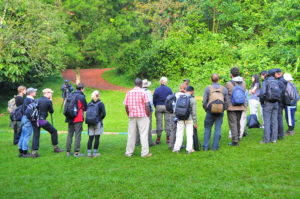
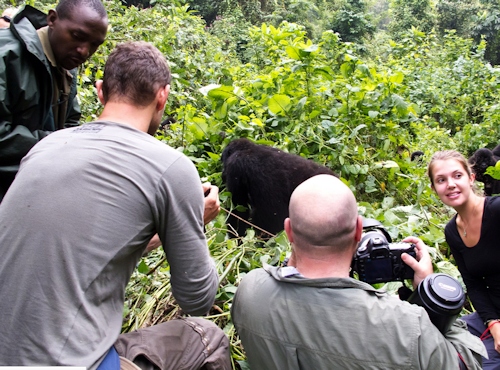
The trek to see the gorillas has two distinct phases. The first is the hike from the closest car park to the forest and national park boundary, which usually takes 30-60 minutes depending on the speed of the party and the group they are visiting. The second is trek into the forest in search of the gorillas, which will usually have been located by the advance trackers by the time reach the forest edge.
The first part of the trek is predictable, and it is usually quite flat and undemanding unless you are going to the Susa (Susa-A), which involves a longer and steeper ascent. The second part is more difficult to predict, as it will depend on the exact location of the gorillas on the day, and on the steepness of the terrain en route. Other factors in determining how tough it will be include the density of the vegetation (bending, crawling through the jungle can be tiring especially if you have to dodge vicious nettles) and whether it has rained recently, in which case everything will be muddier and quite slippery underfoot.

At risk of stating the obvious, age and fitness levels are key factors in how difficult the hike will feel. Susa Group aside, moderately fit people under the age of 40 seldom feel any significant strain, but a high proportion of trackers are in their 50s or 60s, in which case the hike might be something tougher. As one trekker has previously commented in the Bradt Guide (Rwanda): ‘We think you underestimate how strenuous the gorilla trip is. We are both 61 but fit and well, bicycle to work each day , and still we had to take regular breaks due to problems with breathing’. That said, while many older travellers do find the track quite demanding, it is very unusual that they are so daunted as to turn back.
An important factor in how difficult the hike will be is which group you are allocated. As a rule, the hike to the Susa Group is the most demanding (but also most rewarding, with more than 40 gorillas on show), while the Sabinyo Group is the most reliably straightforward to reach. The hikes to Kwitonda, Hirwa and Group Thirteen are also usually quite undemanding, whereas the hikes to Amahoro Umubano Groups tend to be more difficult, but not as tough as the Susa Group.
Unfortunately, these things aren’t set in stone, and any group might be unusually demanding (or easy) to reach on a bad day. Furthermore, nobody can guarantee which group you will be allocated in advance. However the guides at Kinigi do make a conscious attempt to match individuals to the most suitable group, especially if they are asked to. Generally the party for the Susa (Susa-A) consists of the lean-looking under-30s, while the opposite holds true for Sabinyo party.
Two further factors are uneven underfoot conditions and high altitude. Most visitors to Africa live in towns and cities where roads and sidewalks are paved, and parks are serviced by neatly footpaths, so they are unused to walking on the more irregular and seasonally slippery surfaces typical of the ascent paths and forest floor. It will help enormously in this regard to wear strong waterproof shoes or hiking boots with a good tread and solid ankle support. Furthermore, if you think you might struggle in these conditions, there is a lot to be said for avoiding the rainy seasons, in particular March-May, when conditions can be dauntingly muddy.
Don’t underestimate the tiring effect of altitude. The trekking takes place at elevations of 2.500-3,000m above sea level, not high enough for altitude sickness to be a concern but sufficient to knock the breath out of anybody – no matter how fit – who has just flown in from a low altitude. For this reason, visitors who are spending a while in Rwanda might think seriously about leaving their gorilla tracking until they’ve been in the country a week or so, and are better acclimatised. Most of Rwanda lies above 1,500m, and much of the country is higher – a couple of days at Nyungwe, which lies above 2,000m, would be good preparation for the Virungas. Likewise if you are coming from elsewhere in Africa, try to plan your itinerary so that you spend your pre-Rwanda days at medium to high altitude: for example, were you flying in from Kenya, a few days in Nairobi (2,300m) or even the Maasai Mara (1,600m) would be far better preparation than time at the coast.
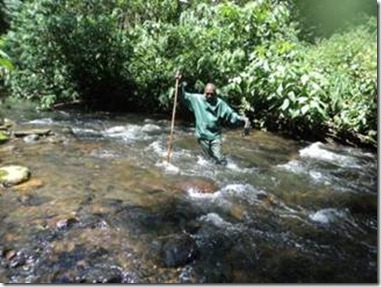
Guides will generally offer you a walking stick at the start of the hike, and, even if you normally shun such props, it is worth taking up the offer to help support you on those slippery mountain paths. If you have luggage, hire a porter too. Once on the trail, take it easy, and don’t be afraid to ask to stop for a few minutes whenever you feel tired. Drink plenty of water and carry some quick calories – biscuits and chocolate can both be bought at supermarkets in Ruhengeri. The good news is that most people who track gorillas find the hike to be far less demanding than they expect, and 99% of cases, whatever exhaustion you might feel on the way up will vanish with the adrenalin charge that follows the first sighting of the silverback gorilla!

How tough is the Rwanda gorilla trek- Which is the toughest mountain gorilla group to track in Rwanda, which gorilla group is the most popular to track, easiest gorilla family to track, how many hours does the gorilla tracking take in Rwanda? Susa, Kwitonda, Sabinyo, Umahoro? How difficult is Gorilla Trekking? How fit must I be to track Mountain Gorillas in Uganda or Rwanda?